The KGB: sword and shield of Soviet power
Three letters the whole world knew. The largest security service on Earth: an intelligence agency that beat the CIA at its own game — and a political police that spied on its own people. Both truths, in one story.
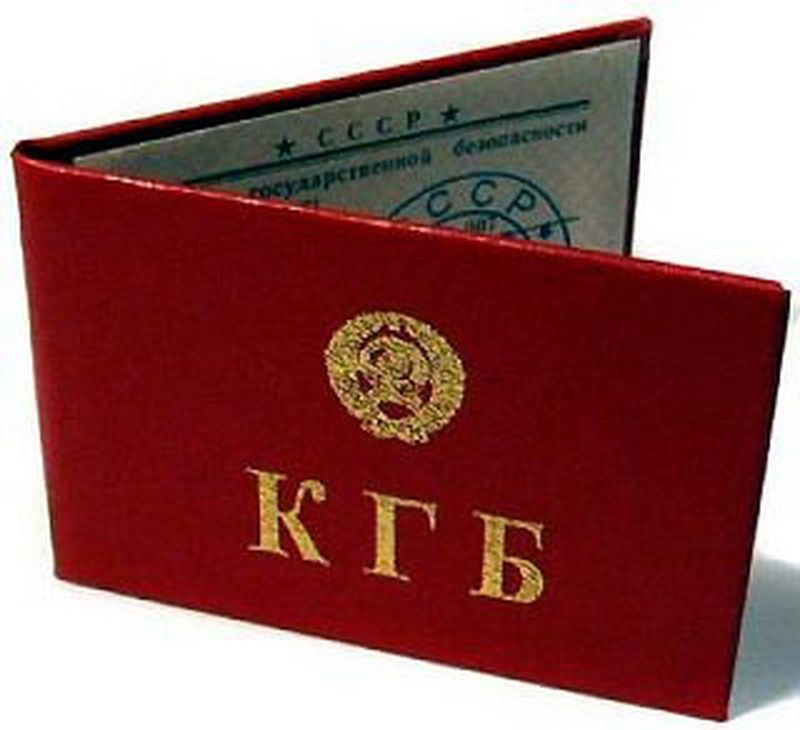
What the KGB was
The KGB — in Russian, Komitet Gosudarstvennoy Bezopasnosti, the Committee for State Security — carried that name for only 37 years, from 1954 to 1991, yet it became the universal synonym for the Soviet secret service and one of the most recognizable Soviet "brands" alongside Sputnik and the Kalashnikov. Its own officers called it "the sword and shield of the Party" — and the formula was precise: the KGB protected not so much the country as the power of the Communist Party, at home and abroad.
It was intelligence agency, counterintelligence service, political police, border guard and leadership protection detail all in one — the largest organization of its kind in the world. And unlike Western services, most of its work was directed not outward but inward — against its own citizens.
From the Cheka to the KGB: a genealogy of fear
The KGB did not appear out of nowhere. It was the final link in a long chain of Soviet security organs that began almost immediately after the October Revolution.
In December 1917, on Lenin's orders, the Cheka was created — the All-Russian Extraordinary Commission for Combating Counter-Revolution and Sabotage, headed by Felix Dzerzhinsky, "Iron Felix." The Cheka could arrest, try and execute "enemies of the revolution" without courts; historians estimate it was responsible for over 140,000 executions. The word "chekist" was born here — Soviet security officers proudly called themselves that until the very end of the USSR.
In 1922 the Cheka was replaced by the GPU, renamed a year later the OGPU — the Party's attempt to put terror on a "planned" footing. It was the OGPU that took over the corrective labor camps and mass surveillance of the population, and carried out dekulakization and forced collectivization. In 1934 the security organs were absorbed into the NKVD — the commissariat whose name is forever tied to Stalin's Great Terror of 1937–38. Then came the NKGB and the MGB, the Ministry of State Security of the war years and late Stalinism.
The turning point came after Stalin's death in March 1953. The all-powerful Lavrentiy Beria, overseer of state security and the atomic project, made a bid for supreme power — and was overthrown and executed by his colleagues, led by Khrushchev. The new leadership feared its own secret police almost more than any foreign enemy. So on March 13, 1954, the service was rebuilt from scratch — no longer a ministry but a committee attached to the Council of Ministers: a deliberate demotion in status, designed to guarantee that the security service would never again stand above the Party. Its first chairman was General Ivan Serov, a former deputy of Beria who had switched sides at exactly the right moment.
How the Committee was built
The KGB was not an "agency" in the Western sense but a parallel empire. It comprised roughly twenty directorates, the most important being:
- The First Chief Directorate — foreign intelligence, running stations across the globe;
- The Second Chief Directorate — domestic counterintelligence;
- The Fifth Directorate (created in 1967) — the fight against "ideological subversion," meaning dissidents, religious believers and national movements;
- The Ninth Directorate — bodyguards of the Party and state leadership;
- The Border Troops — hundreds of thousands of soldiers along the Soviet frontier.
Headquarters stood on Lubyanka Square in Moscow — the very word "Lubyanka" became a byword for the secret police. At its peak the KGB is estimated to have employed some 480,000 people, border guards included, while its network of informers across the country ran into the millions. No factory, institute or army unit functioned without its "first department" and its curator from the organs.
The Andropov era
For fifteen years, from 1967 to 1982, the Committee was headed by Yuri Andropov — the most influential chairman in KGB history. In 1956, as Soviet ambassador in Hungary, he had watched with his own eyes how seemingly unshakable communist power collapsed within days; historians call this Andropov's "Hungarian complex." Hence his logic: crush any dissent in the bud. Andropov was among the chief advocates of the invasion of Czechoslovakia in 1968, and at home he built a system of methodical persecution of dissidents.
Under him the Fifth Directorate perfected "prophylaxis": surveillance, searches, dismissals, expulsions from universities, warning "conversations." Those who could not be intimidated faced camps, exile or punitive psychiatry — healthy people were diagnosed with "sluggish schizophrenia" and held in special hospitals for years. Through this machine passed Solzhenitsyn (expelled from the country in 1974), Academician Sakharov (exiled to Gorky in 1980) and hundreds of lesser-known human rights activists. Tellingly, Andropov at the same time enjoyed a reputation as an "intellectual" and recruited the "best and brightest" graduates: a KGB career was prestigious, well paid and opened doors.
In 1973 Andropov joined the Politburo, and in 1982, after Brezhnev's death, he became General Secretary of the Communist Party — the first professional security chief to lead the Soviet Union. The precedent proved contagious: two decades later, another KGB man would come to lead Russia.
Espionage: the largest intelligence service on Earth
Abroad, the KGB achieved results that even its adversaries acknowledge. By the late Cold War, the First Chief Directorate was considered the world's largest foreign intelligence service. The Committee's predecessors had already penetrated the American atomic project: declassified documents point to at least five agents inside the bomb program and possibly hundreds of agents across the US government by 1945. In Britain operated the legendary Cambridge Five, led by Kim Philby — a senior British intelligence officer who fed Moscow secrets for decades; between 1941 and 1945 alone, Soviet agents in Britain are estimated to have passed 15,000–20,000 documents.
Throughout the Cold War the KGB and the CIA waged a continuous war of spies: recruitments, defectors, exchanges. The first great swap became a classic of the genre: in February 1962, on the Glienicke Bridge between West Berlin and Potsdam, the Soviet illegal Rudolf Abel (real name William Fisher), who had operated in the United States for nearly a decade, was exchanged for Francis Gary Powers, the American pilot shot down over the Urals in a U-2 spy plane. That scene — fog, a bridge, two figures walking toward each other — became the signature image of the entire era.
One of the Committee's loudest later successes came in 1985 with the recruitment of Aldrich Ames, a CIA officer who betrayed dozens of American agents; ten of them were executed, and Ames received about four million dollars from the KGB. Beyond political intelligence, the Committee industrialized scientific-technical espionage: technology obtained in the West regularly accelerated Soviet missile, aviation and submarine programs. Intelligence also played its part in the sharpest crises of the era — from Berlin to the Cuban Missile Crisis of 1962.
The KGB in everyday life
For the ordinary Soviet citizen, the KGB was less a specific institution than a permanent background hum. Everyone knew: a joke about Brezhnev was best told only to trusted friends, a letter abroad might be read, a phone call might be listened to. Any trip abroad, even to "fraternal" Bulgaria, required approval by an exit commission and vetting by the organs; scientists who knew state secrets — and often people with simply the "wrong" biography — were barred from travel for years.
The paradox is that by late socialism mass repression was already gone — the Committee worked with surgical precision, preferring "prophylaxis" to arrests. But it was precisely its omnipresence and invisibility that made it so effective: the mere knowledge that the KGB could be listening was enough to make people police their own words. Self-censorship worked better than any censor. Hence a whole genre of Soviet folklore — KGB jokes, in which fear was smelted into laughter: told in a whisper, with a glance over the shoulder, they convey the atmosphere of the era better than any document.
Decline: glasnost, the coup and the end
Gorbachev's perestroika undermined the KGB's main foundation — the Party's monopoly on power and information. Glasnost made it possible to speak openly about the crimes of the Cheka and the NKVD, about the camps and the executions; the prestige of the "organs" melted away. The Committee saw perfectly well that the country was sliding into crisis — but as the Party's servant it could not stop the decline, and it had no intention of reforming itself.
The denouement came in August 1991. KGB chairman Vladimir Kryuchkov was one of the chief organizers of the coup attempt against Gorbachev, meant to turn perestroika back. The putsch collapsed in three days. On the evening of August 22, 1991, a Moscow crowd used a crane to topple the statue of Dzerzhinsky in front of KGB headquarters on Lubyanka Square — an image that became the symbol of the end of an era. That autumn the Committee was dismembered: intelligence, counterintelligence, border protection and government communications were split into separate agencies, and on December 3, 1991, the KGB of the USSR formally ceased to exist — weeks before the Soviet Union itself dissolved.
No KGB institution and no KGB leader was ever held accountable for crimes against Soviet citizens. Most of the archives remain classified to this day.
Legacy: between fear and myth
Any assessment of the KGB inevitably splits in two — and we give both sides.
- On one hand — a formidable intelligence service, top-class professionals, operations studied in intelligence academies around the world.
- On the other — a political police whose main job was spying on its own people: the broken lives of dissidents, punitive psychiatry, and a direct line of descent from the terror of the Cheka and the NKVD.
Both sides are true, and neither cancels the other.
The Committee's heirs live on. In Russia its functions were divided between the FSB (counterintelligence and internal security) and the SVR (foreign intelligence); since 2000 the country has been led by Vladimir Putin, a former KGB foreign intelligence officer who served in the Committee for 16 years. And in Belarus the security service is still officially called the KGB — the only one in the former Soviet space to keep the Soviet name. The shadow of the Lubyanka has proved longer than the Soviet Union itself.
Frequently asked questions
What does KGB stand for? Komitet Gosudarstvennoy Bezopasnosti — the Committee for State Security of the USSR.
When was the KGB founded and when was it dissolved? Founded on March 13, 1954, a year after Stalin's death. Formally abolished on December 3, 1991, on the eve of the dissolution of the USSR.
What did the KGB actually do? Foreign intelligence, counterintelligence, border protection and leadership security — and political policing: surveillance of citizens, persecution of dissidents and the fight against "ideological subversion." Most of its work was directed inside the country.
How was the KGB different from the CIA? The CIA is a foreign intelligence agency only, constrained by law and congressional oversight. The KGB combined intelligence with secret police functions, operated mostly against its own citizens, and answered not to law but to the Party.
What replaced the KGB? In Russia — the FSB (internal security) and the SVR (foreign intelligence). Every former Soviet republic created its own services; in Belarus the agency is still called the KGB.
Who was the most famous KGB chairman? Yuri Andropov, who led the Committee from 1967 to 1982 and then became leader of the USSR. It was Andropov who turned the KGB into the main instrument of the war on dissent.
Related
- The Cold War: half a century of confrontation — the main battlefield of the KGB and the CIA.
- Joseph Stalin — the era of the NKVD and the Great Terror, the Committee's prehistory.
- Andrei Sakharov — the most famous dissident to pass through the KGB machine.
- The dissolution of the USSR (1991) — Kryuchkov's coup and the end of the Committee.
- The Gulag: an archipelago of forced labor — the camps run by the Committee's predecessors.
- Yuri Andropov: the KGB man's fifteen months — the committee's most influential chairman.
Sources
The facts in this article can be verified against authoritative sources:
- Encyclopaedia Britannica, "KGB" (by Robert W. Pringle, former CIA intelligence analyst): https://www.britannica.com/topic/KGB
- Wikipedia, "KGB": https://en.wikipedia.org/wiki/KGB
- History Hit, "The KGB: Facts About the Soviet Security Agency": https://www.historyhit.com/facts-about-the-kgb/
- EBSCO Research Starters, "KGB": https://www.ebsco.com/research-starters/history/kgb
- Grey Dynamics, "KGB: History, Structure and Operations": https://greydynamics.com/kgb-history-structure-and-operations/
Where assessments differ (formidable service or machine of repression), we give both positions rather than one.