The Russian Revolution of 1917: from February to October — a full overview
In a single year, 1917, Russia went through two revolutions: February toppled the tsar, October brought Lenin's Bolsheviks to power. The causes, the events and the consequences that shaped the whole 20th century — in one picture.
One country, one year — two revolutions
The Russian Revolution of 1917 was in fact two revolutions in a single year. The first, the February Revolution, overthrew Tsar Nicholas II and ended three centuries of Romanov monarchy. The second, the October Revolution, brought Lenin's Bolsheviks to power and gave birth to the world's first socialist state.
Only eight months separated them — but those months shaped the entire 20th century: without 1917 there would have been no USSR and no Cold War. And on the heels of the revolutions came a civil war that cost the country millions of lives.
Why the dates "drift": Old Style and New Style
Until 1918 Russia lived by the Julian calendar ("Old Style"), which lagged 13 days behind the European one. That is why the February Revolution, by the modern calendar, began in March — and the October Revolution took place in November. In this article we give both dates.
The long causes: autocracy, land, factories
The revolution did not come out of nowhere — it had been building for decades.
Russia remained an autocracy: the tsar ruled alone, and the administration was riddled with corruption and inefficiency. The peasants — the majority of the population — were starved of land and dreamed of owning the fields they worked. Rapid industrialization drew millions of workers into the cities, where they lived in harsh conditions and listened ever more willingly to revolutionaries. The empire's many national minorities chafed under Russian domination.
1905: the "dress rehearsal"
The first explosion came in 1905. Defeat in the war with Japan compounded discontent at home, and the shooting of a peaceful workers' procession in St. Petersburg on 9 (22) January 1905 — "Bloody Sunday" — set the whole country alight: strikes, riots and mutinies followed (including the famous revolt on the battleship Potemkin). The first workers' council — soviet — was born in that turmoil.
The tsar survived by promising concessions: the October Manifesto gave the country a parliament, the Duma. But Nicholas II had no wish to share real power and dissolved the Duma more than once. The 1905 revolution was crushed — yet it created both the experience and the institutions that would "fire" in 1917. Lenin later called it the dress rehearsal.
World War I: the final blow
The fatal catalyst was the First World War. The army proved ill-prepared for a major war, the front suffered defeats, and casualties ran into the millions. The economy buckled: transport failed, and the cities ran short of bread and fuel.
The monarchy's own authority was crumbling too. Tsarina Alexandra and her circle fell under the influence of the scandalous "holy man" Grigori Rasputin; the rumours and scandals around him ate away what trust in the dynasty remained. At the end of 1916 aristocratic conspirators murdered Rasputin — but it was already too late to save the crown's reputation.
The February Revolution: the days that toppled the monarchy
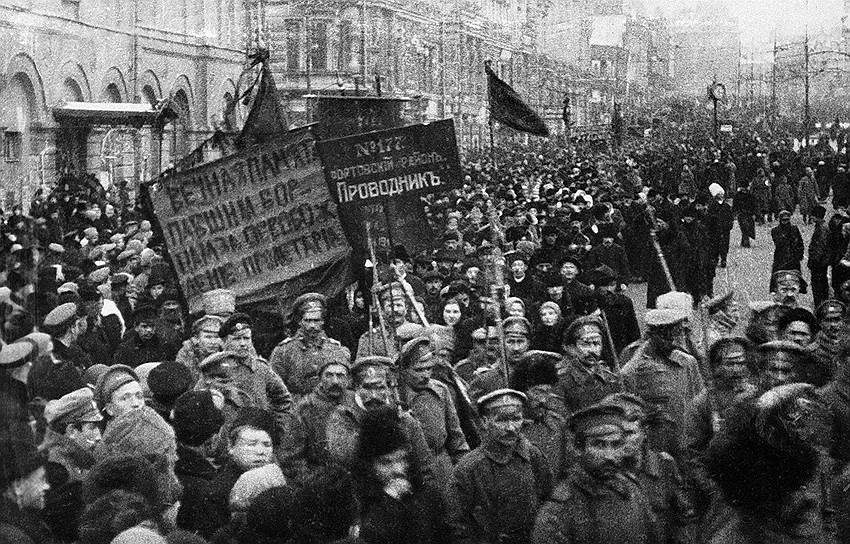
On 23 February (8 March) 1917 — International Women's Day — women workers and their comrades took to the streets of Petrograd: bread queues, strikes, slogans against the war and the tsar. The protests grew by the day; more than a thousand people died in clashes with the police and troops. Then came the decisive turn: the soldiers of the Petrograd garrison began going over to the crowds.
On 2 (15) March 1917 Nicholas II abdicated. His brother, Grand Duke Michael, declined the crown. The Romanov monarchy, which had ruled Russia for more than three centuries, fell within days — spontaneously, with no single guiding centre.
Dual power: two masters in one country
Power passed to the Provisional Government (headed first by Prince Lvov, from July by Alexander Kerensky). But a rival appeared at once — the Petrograd Soviet of Workers' and Soldiers' Deputies, elected "from below." This split came to be called dual power.
The country gained unprecedented freedoms — of the press, of assembly, of parties. But the key questions hung in the air: the government carried on the unpopular war and dragged its feet on land reform. In eight months its line-up was reshuffled four times — while the situation only worsened.
Lenin returns
In April 1917 Vladimir Lenin returned from a decade of exile. His programme was radical and clear: no support for the Provisional Government, "All power to the Soviets!", "Peace, land, and bread!" Against the backdrop of an endless war and empty shelves, Bolshevik influence grew at speed.
The summer of 1917: the July failure and the Kornilov revolt
In July a spontaneous armed uprising in Petrograd (the "July Days") ended in rout: the Bolsheviks were denounced as German agents, and Lenin fled to Finland.
But in August everything was upended by the Kornilov revolt: the army's commander-in-chief marched troops on the capital, and Kerensky, to fight him off, had to arm the workers' detachments — including the Bolshevik Red Guards. The revolt collapsed, and the Bolsheviks returned to politics with weapons in hand and a reputation as defenders of the revolution. By September they held majorities in the Soviets of Petrograd and Moscow.
October: the Bolsheviks take power
On the night of 25 October (7 November) 1917, Red Guard detachments, soldiers and sailors occupied the capital's key points, and the following night they took the Winter Palace and arrested the ministers. It all passed almost without bloodshed. The Congress of Soviets proclaimed the transfer of power to the Soviets and confirmed a government headed by Lenin; its first acts were the Decree on Peace and the Decree on Land.
How the uprising was prepared, what really happened at the Winter Palace (and why the "heroic storming" is a myth born of cinema) — we examine in detail in a separate article: The October Revolution of 1917.
From decrees to dictatorship
The Bolsheviks held on to power by force. In the elections to the Constituent Assembly in November 1917 they won only about a quarter of the vote — and when the assembly refused to submit in January 1918, it was dissolved the very next day. As early as December 1917 a secret police — the Cheka — had been created. In March 1918 Russia left the world war by signing the harsh Treaty of Brest-Litovsk with Germany.
The Civil War: the price of revolution
The seizure of power split the country. From 1918 the "Reds" were attacked by the "Whites" — a motley coalition ranging from monarchists to moderate socialists, backed by foreign interventionists (Britain, France, the USA, Japan and others). On the night of 16–17 July 1918, in Yekaterinburg, the Bolsheviks shot the former Tsar Nicholas II together with his family.
The war was fought with appalling cruelty on both sides; the Red Terror became state policy. "War communism," with its forced grain seizures, ruined the countryside, and in 1921 a terrible famine broke out. By 1921–1922 the Red Army had won, but the price was enormous: by various estimates, the Civil War, together with famine and epidemics, claimed between 7 and 12 million lives, most of them civilians. Millions more emigrated.
The birth of the USSR
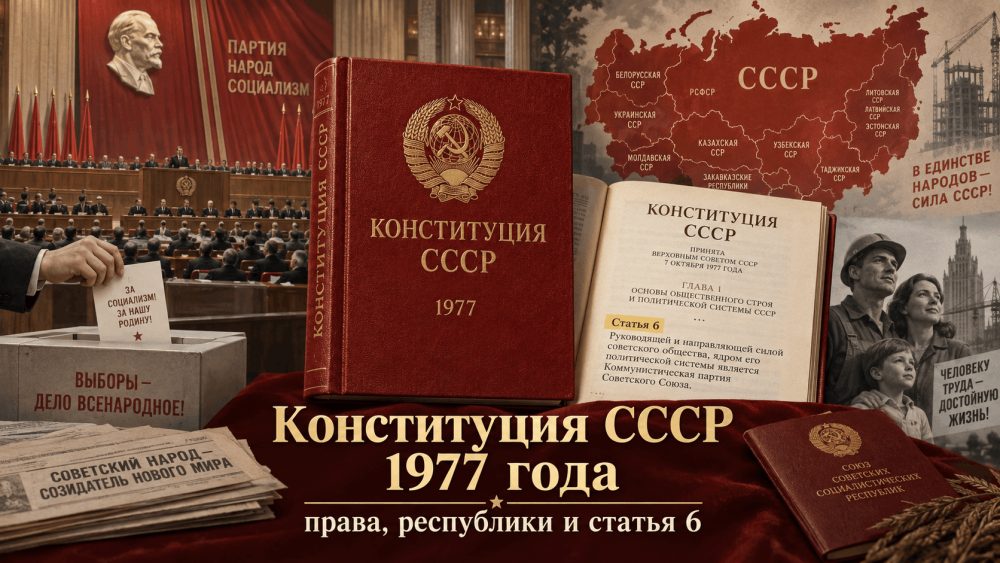
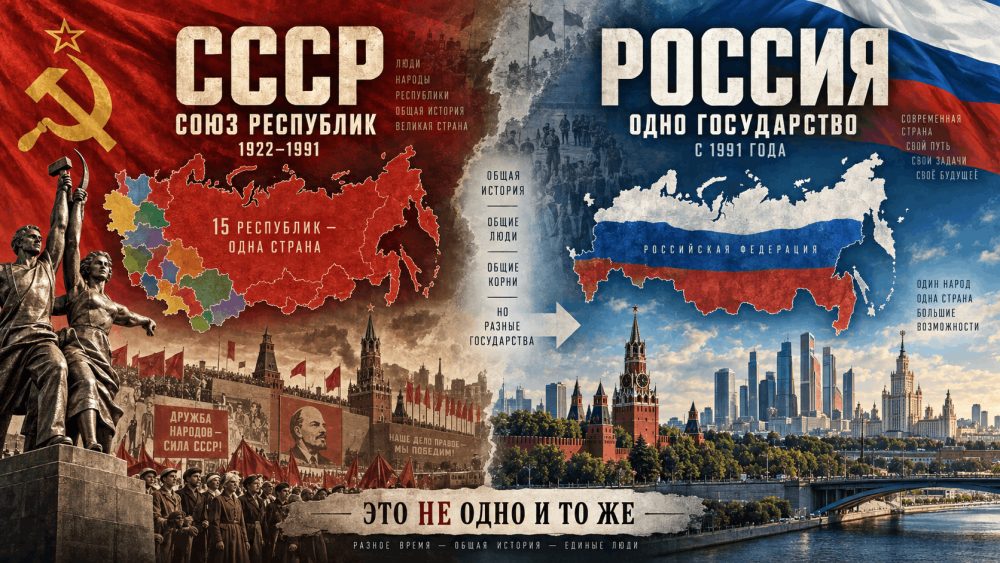
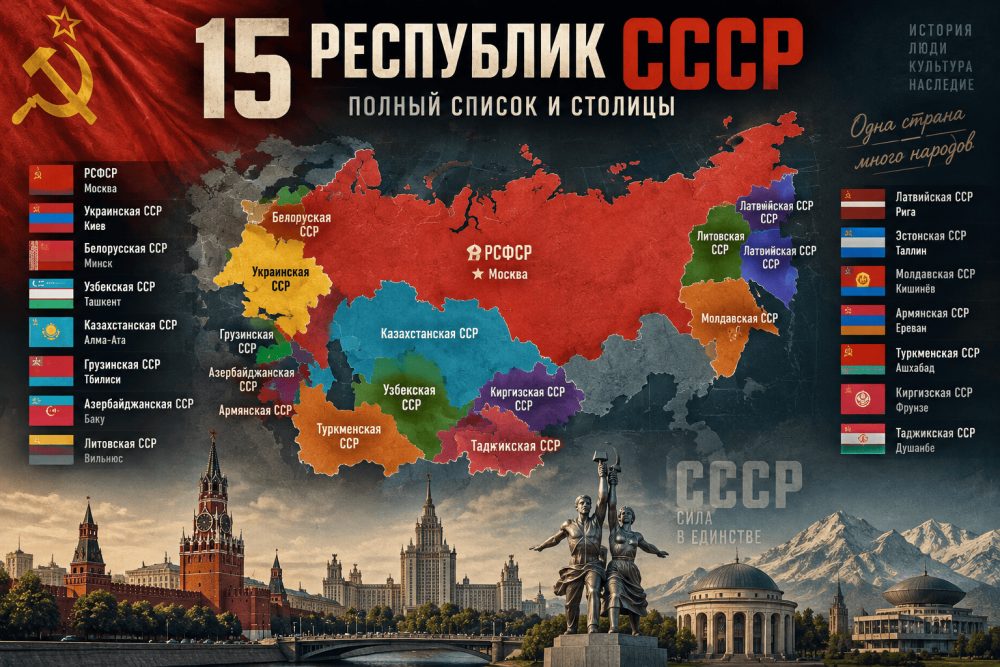
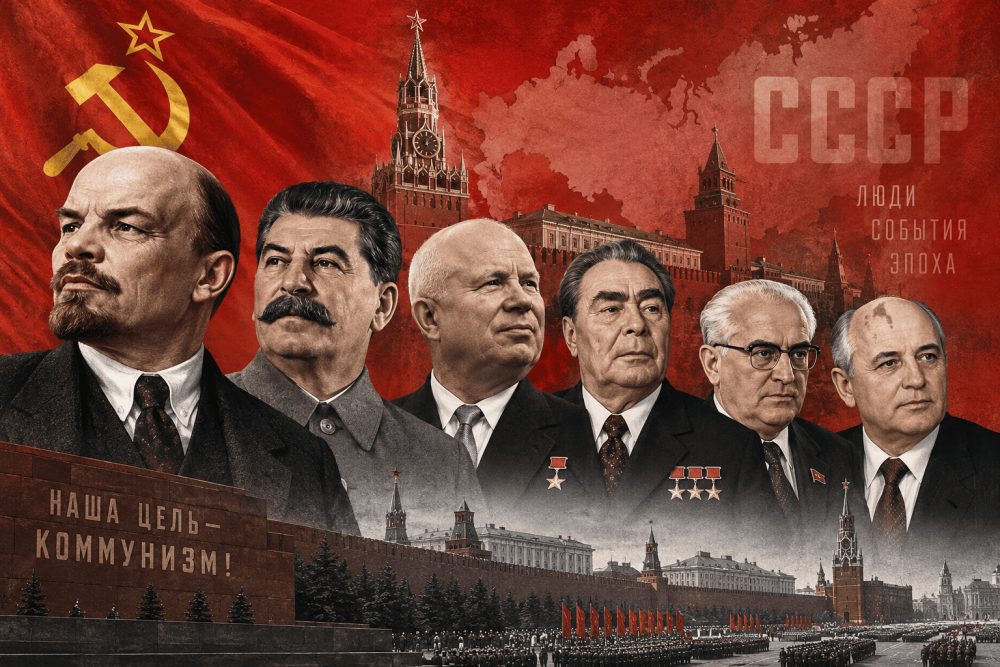
On 30 December 1922, on the ruins of the fallen empire, a new state appeared — the Union of Soviet Socialist Republics (how it happened). The Bolshevik party — the future CPSU — would rule it for almost seven decades, until the dissolution of the USSR in 1991.
How historians see it
The arguments about 1917 have never ceased, and we set out the main positions honestly.
- The Soviet tradition saw October as a great popular revolution of workers and soldiers that opened a new era for humanity.
- Many Western historians of the "classical" school saw it as a coup by a disciplined minority that skilfully exploited the chaos; as evidence they pointed to the Constituent Assembly elections, which the Bolsheviks lost.
- Later "revisionist" scholars stress that the radicalization of workers and soldiers by the autumn of 1917 was real, and that the Bolsheviks rested on genuine mass support in the capitals — at least at the moment they took power.
One thing is beyond dispute: 1917 was one of the great turning points of world history — and at the same time it opened the road to civil war and dictatorship. We do not choose one interpretation for the reader.
Frequently asked questions
What was the Russian Revolution of 1917? Two revolutions in one year: the February Revolution (which overthrew Tsar Nicholas II) and the October Revolution (which brought Lenin's Bolsheviks to power). The outcome was the creation of the USSR.
How does the February Revolution differ from the October Revolution? February was spontaneous and ended the monarchy, passing power to a Provisional Government. October was a planned Bolshevik uprising that established Soviet power.
Why was the February Revolution in March and the October Revolution in November? Russia used the Julian calendar, 13 days behind: 23 February Old Style is 8 March New Style, and 25 October is 7 November.
What happened to the tsar and his family? After his abdication Nicholas II and his family were held under arrest, and on the night of 16–17 July 1918 they were shot in Yekaterinburg.
How many people died? The takeovers of 1917 themselves were almost bloodless, but the Civil War that followed, together with famine and epidemics, claimed by various estimates between 7 and 12 million lives.
How did it all end? With the Bolshevik victory in the Civil War and the creation of the USSR on 30 December 1922.
Related
- The October Revolution of 1917 — a detailed account of the Bolshevik seizure of power.
- Vladimir Lenin — the leader of the revolution and first head of the Soviet state.
- The founding of the USSR (1922) — the state born of the revolution.
- The dissolution of the USSR (1991) — how the story ended 69 years later.
Sources
The facts in this article can be verified against authoritative sources:
- Encyclopædia Britannica, "Russian Revolution": https://www.britannica.com/event/Russian-Revolution
- Encyclopædia Britannica, "Russian Revolution Timeline": https://www.britannica.com/list/russian-revolution-timeline
- HISTORY, "Russian Revolution": https://www.history.com/articles/russian-revolution
- Wikipedia, "Russian Revolution": https://en.wikipedia.org/wiki/Russian_Revolution
- United States Holocaust Memorial Museum, "The Russian Revolution, 1917": https://encyclopedia.ushmm.org/content/en/article/the-russian-revolution-1917
Where assessments differ (the nature of October, the death toll of the Civil War), we give different positions and ranges rather than a single figure.