Perestroika and glasnost: the reforms that changed everything
Two Russian words the whole world learned untranslated in the 1980s. How an attempt to repair socialism opened the country's mouths and archives, emptied its shelves — and ended with the disappearance of the country itself.
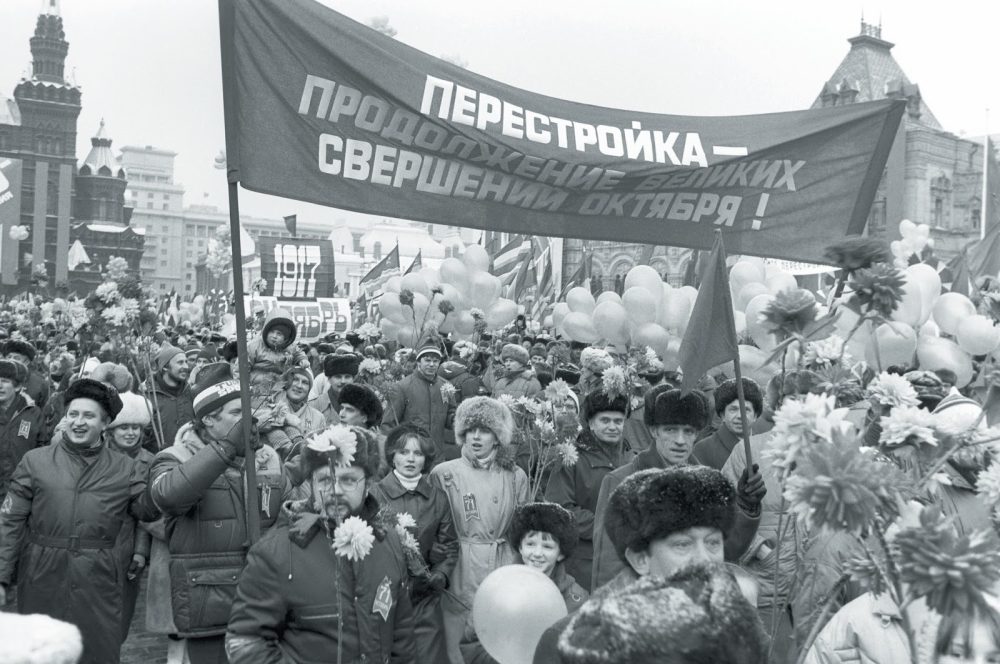
What perestroika and glasnost were
Perestroika ("restructuring") was the reform course launched by Mikhail Gorbachev after he came to power in 1985: an attempt to rebuild the Soviet economy and political system — not to abolish socialism, but to finally make it work. Glasnost ("openness") was the course's second pillar: open discussion of problems, the loosening of censorship, the right to speak about what had been unspeakable for decades.
Both words entered the world's languages untranslated — newspapers from New York to Tokyo printed "perestroika" and "glasnost" as they were. The term perestroika was put into circulation by the sociologist and economist Tatyana Zaslavskaya, while the word glasnost had formally existed for years — it even appeared in the Soviet Constitution of 1977, simply without any practical meaning. Gorbachev filled both words with substance — and reaped consequences that no one had planned, himself included.
Why reforms were needed
By the mid-1980s the USSR had arrived at the condition later officially called "stagnation": growth rates had been falling for twenty years, the technological gap with the West was widening, and the oil revenues that had fed the country under Brezhnev collapsed together with oil prices. The economy poured monstrous resources into defense and gave its citizens less and less: queues and shortages were part of daily life. Andropov had already spoken of the need for change; Gorbachev, the youngest general secretary in decades, received power in March 1985 precisely as the candidate of renewal.
As early as May 1985, in Leningrad, he publicly admitted that economic development had slowed and living standards were inadequate. For a Soviet leader such an admission was unprecedented — until then, only successes had been announced from the podium.
Three words of an era: uskoreniye, perestroika, glasnost
The reforms unfolded in layers, and each layer had its own word.
- Uskoreniye — "acceleration" (1985–86). The first, most cautious phase: modernize the machine tools, tighten discipline, pour in investment — change the tempo without changing the system. This phase also included the notorious anti-alcohol campaign: vineyards cut down, lines outside liquor stores, and a hole in the budget. By 1987 it was clear there was nothing left to accelerate — the machine itself needed restructuring.
- Perestroika (from 1987). The Law on State Enterprise gave factories autonomy; the 1988 Law on Cooperatives legalized the first private business in 60 years — co-op cafés, workshops, video salons. Negotiated prices, leasing and the election of managers appeared. But the reform stalled halfway: the plan no longer commanded, the market did not yet work. Shelves emptied, and rationing returned for the first time since the postwar years.
- Glasnost (from 1986–87). Conceived as an instrument — to stir society and use publicity as a weapon against bureaucratic sabotage — glasnost quickly outgrew its design. The catalyst was Chernobyl: a catastrophe first met with the habitual silence showed the price of secrecy, and after it the dam broke.
What glasnost opened
In two or three years the country read everything that had been taken from it over seventy. Journals printed Akhmatova, Bulgakov, Pasternak and Nabokov; Solzhenitsyn's The Gulag Archipelago was published officially. Newspapers wrote about the Gulag and the Great Terror, about the 1939 pact, about the privileges of the nomenklatura — the "blank pages" of history were filled in one after another. Academician Sakharov returned from his Gorky exile — Gorbachev telephoned him personally.
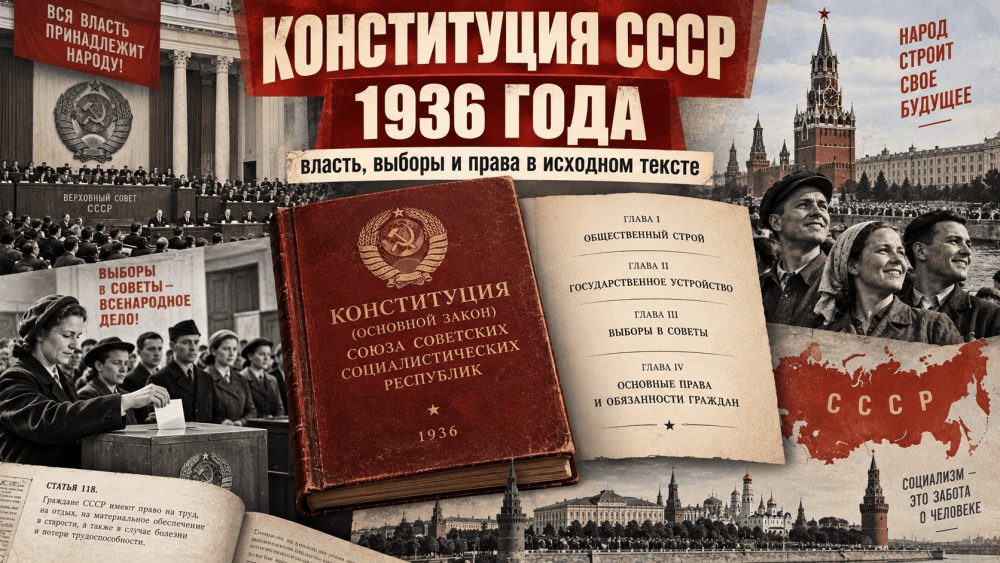
In 1989 the country was glued to its television sets: for the first time, the sessions of the Congress of People's Deputies — the first body chosen in contested elections — were broadcast live. Deputies criticized the government, the army and even the KGB from the podium — five years earlier such words spoken in a kitchen could have opened a case file. The party's political monopoly melted on live television; in 1990 the article on the leading role of the Communist Party was removed from the Constitution.
Unplanned consequences
From there events escaped control — in every direction at once.
The economy sank: half-freedom proved worse than either plan or market, and shortages became total. Glasnost, having opened the truth about the past, undermined the system's own legitimacy: if the party was guilty of terror, why was it in power? Freedom of speech awakened the national movements: the Baltics began speaking of independence, and conflicts flared in the Caucasus. And Gorbachev's refusal to hold Eastern Europe by force brought the socialist camp down within the single year of 1989 — from the Round Table in Poland to the fall of the Berlin Wall.
The finale is known: the August 1991 coup, staged by opponents of reform, finished off the union center, and in December 1991 the USSR ceased to exist. Perestroika, conceived as the repair of socialism, became its conclusion.
The argument over perestroika
The assessment of perestroika is one of the great historical arguments of the post-Soviet space, and we present both sides.
- One memory: perestroika gave people back their speech, their books, their history and their elections; it freed political prisoners, ended the Cold War and the Afghan war, and let Eastern Europe go free without a great bloodletting. In this logic Gorbachev is a liberator — even if not an entirely willing one on every point.
- The other memory: the reforms destroyed a working, if modest, way of life — savings, certainty, the country itself; the impoverishment, rationing and chaos of the 1990s outweighed, for millions, the freedoms gained. In this logic perestroika was a catastrophe of governance, not a liberation.
Both memories are real and live on in families to this day. Our position as an encyclopedia is simple: we present the facts of each side — and leave the conclusion to the reader.
Frequently asked questions
What was perestroika, in simple terms? Gorbachev's reform course (1985–1991): give the economy elements of the market and society openness and elections, in order to save socialism from stagnation. The rescue failed — the reforms accelerated the collapse of the USSR.
What was glasnost? The policy of openness: loosened censorship, the publication of banned books and the truth about the past, criticism of the authorities in the media. The word entered the world's languages untranslated.
When did perestroika begin? It is dated from Gorbachev's rise to power in March 1985 and the April plenum of the Central Committee; the word "perestroika" became the main slogan from 1986–87.
Why did perestroika fail? The economic reform stalled between plan and market and produced total shortages; glasnost undermined the party's legitimacy; national movements pulled the republics out of the Union. The system could not survive the restructuring of everything at once.
Did perestroika destroy the USSR? The reforms were not the cause of the crisis — they were a response to it, but a response that hastened the denouement: openness and a half-freed economy made the accumulated problems visible and unmanageable. Whether the collapse was inevitable is still debated.
What did "uskoreniye" mean? Gorbachev's first slogan (1985–86): accelerate economic development through investment and discipline without changing the system. It quickly proved insufficient and gave way to perestroika.
Related
- Mikhail Gorbachev — the architect of the reforms and the last leader of the USSR.
- Chernobyl (1986) — the catastrophe that catalyzed glasnost.
- Shortages in the USSR — the economic underside of the reform era.
- Andrei Sakharov — the symbol of the freeing of political prisoners.
- The dissolution of the USSR (1991) — the finale to which perestroika led.
Sources
The facts in this article can be verified against authoritative sources:
- Encyclopaedia Britannica, "Russia — Perestroika, Glasnost, Reforms": https://www.britannica.com/place/Russia/The-Gorbachev-era-perestroika-and-glasnost
- Encyclopaedia Britannica, "Glasnost": https://www.britannica.com/topic/glasnost
- Wikipedia, "Perestroika": https://en.wikipedia.org/wiki/Perestroika
- HISTORY, "Perestroika: Glasnost, Definition & Soviet Union": https://www.history.com/articles/perestroika-and-glasnost
- Seventeen Moments in Soviet History (Michigan State University), "Perestroika and Glasnost": https://soviethistory.msu.edu/1985/perestroika-and-glasnost/
Where assessments diverge (liberation or catastrophe), we give both positions and the arguments for each.