Battleship Potemkin (1925): Montage, History and the Odessa Steps
How Eisenstein’s film works: five acts, the stone-lion montage, invention on the Odessa Steps, different versions and British classification records.
Sergei Eisenstein’s Battleship Potemkin is a 1925 silent fiction film about a naval mutiny in 1905. The twenty-year gap matters: the audience is watching a later revolutionary interpretation, not newsreel footage of the rebellion. Its reputation rests both on its political statement and on the way it makes separate images work together.
From a broad project to one ship
In an article published by Durham University, scholars Dušan Radunović and Daniel O’Brien explain that the original project covered several episodes of the 1905 revolution. During production, it narrowed to the battleship mutiny and the events around it.
Mosfilm’s catalogue credits Sergei Eisenstein as director, Nina Agadzhanova as screenwriter and Eduard Tisse as cinematographer. The credits are a reminder that a recognisable directorial style emerges through collaboration: a script supplies material, cinematography produces images and editing connects them into an argument.
Within Soviet cinema, this is a striking example of a relatively concentrated historical episode acquiring a much larger life on screen. The film’s influence, however, does not make it a substitute for studying the mutiny itself.
Five acts rather than one person’s life
Mosfilm identifies five parts: the dispute over food, the revolt aboard the ship, mourning for a dead sailor, the Odessa Steps and the encounter with the squadron. The action moves from conflict within the crew’s immediate world toward the question of solidarity beyond the ship.
The structure can be read as a progressive widening of space. First comes the fate of individual sailors; the city then enters the story; other ships become central to the conclusion. The scale changes while the audience repeatedly encounters the relationship between a group and the authority it had obeyed.
A BFI essay notes Eisenstein’s avoidance of a conventional single central protagonist. That does not mean the film lacks memorable faces. Individual experiences are incorporated into collective action rather than developed as separate, complete biographies.
How editing produces meaning
The same BFI account discusses three shots of stone lions in different poses. Their succession suggests a lion waking up. The perceived movement is produced between images of statues rather than performed within one shot.
A simple invented example illustrates the principle. Show a closed door, then a frightened face, and viewers will begin to connect them: who might be behind the door, and what does the person fear? The camera need not have recorded those elements as one continuous event. Their order encourages the audience to construct a relationship. This is an explanatory example, not a description of another scene in Potemkin.
On the Odessa Steps, editing organises the experience of danger through soldiers, the crowd and individual reactions. Watching the transitions is as revealing as watching the action: when does a wide view give way to a face, and when does attention shift from many people to one?
A related question about the arrangement of images arises with Soviet posters. Cinema adds a further dimension: the audience encounters the images in a temporal order controlled by the edit. The viewer cannot take in the whole sequence at once in the same way as a single printed composition.
Is the Odessa Steps sequence documentary evidence?
No. The film was made twenty years after the mutiny, and Mosfilm classifies it as fiction. Radunović and O’Brien describe the famous steps sequence as largely invented. Its emotional force does not establish that the historical events happened exactly as shown.
Two questions should remain distinct. What can contemporary documents tell us about 1905? And how was that past presented to an audience in 1925? Potemkin is especially important for the second question, as evidence about revolutionary memory, artistic form and the attempt to address a mass audience.
That does not remove its historical value. A fiction film can be a powerful source for the culture that produced it while taking considerable liberties with an earlier period. The necessary step is to identify which history it is being used to investigate.
Why do different versions exist?
Silent cinema should not automatically be imagined as a screening in complete silence. Equally, the music attached to a particular modern copy should not be assumed to be its original 1925 accompaniment. Mosfilm’s catalogue names composers associated with musical versions; those credits do not make the production an originally synchronised sound film.
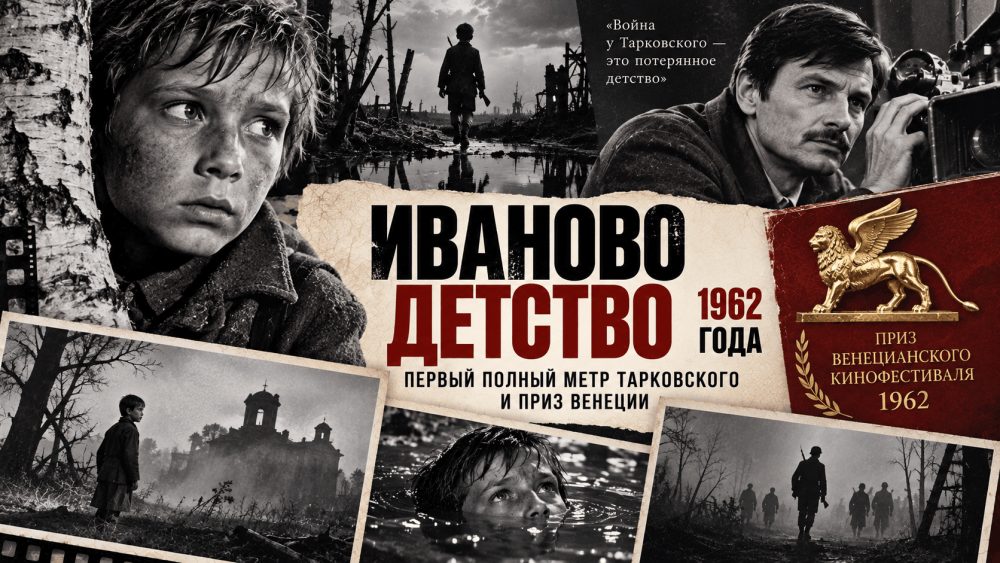
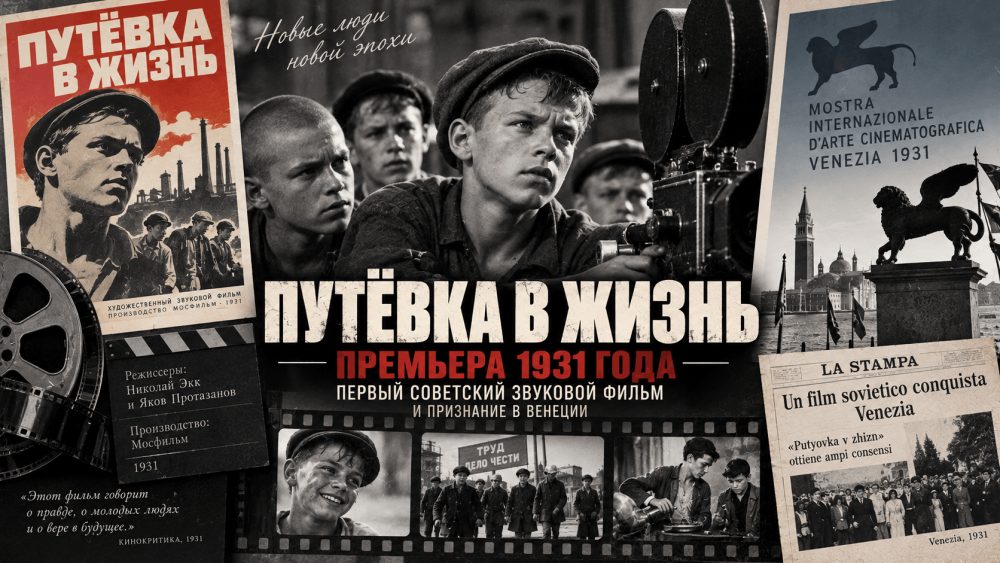
The history of Road to Life, released in 1931, offers a comparison with a different relationship between sound technology and storytelling. When choosing a copy of Potemkin, restoration information, music credits and running time can matter alongside the production year.
The British Board of Film Classification records a refusal to classify Potemkin on 30 September 1926 and a separate cinema-version entry dated 11 January 1954. These establish particular British decisions, not a uniform worldwide prohibition. Later entries in the same database document further versions and submissions.
The film can be approached as both a political work and an experiment in directing the viewer’s attention. The same distinction is useful with the much later Ivan’s Childhood: a historical subject does not explain a film’s method by itself. The question is how the film turns that subject into an experience of images, timing and emotion.