Soviet cars: a waiting list five years long
An Italian factory on the Volga, a car priced at five annual salaries, and a years-long line to buy one. How the USSR built a people's car, why the Niva conquered Europe, and what the Zhiguli says about the planned economy more honestly than any textbook.
A country without a private car
For the first half century of Soviet history, a personal car was not a commodity but a rank. The auto industry worked for the state: trucks for the construction sites, Pobedas and Volgas for taxi fleets and institutions, Chaikas and ZILs for the nomenklatura, and the limousines were never sold at all, only assigned with the office. The ordinary citizen was left with the rare Moskvich, the humpbacked Zaporozhets that starred in half of all Soviet jokes, and a dream.
By the mid-1960s the gap had become indecent: the West was moving into private cars by the millions, while the USSR had fewer cars per person than prewar Europe. Kosygin's government solved the problem in signature Soviet style: not by growing an industry but by buying one whole.
Italians on the Volga
In 1966 the USSR signed the contract of the century with Fiat: the Italians would build a giant turnkey car plant in the Soviet Union. The site was chosen on the Volga, and the factory city was named Togliatti, after Palmiro Togliatti, the longtime leader of the Italian Communist Party, which made a capitalist deal ideologically immaculate. Thus arose VAZ, one of the largest car plants on the planet: over a hundred and fifty kilometers of assembly lines and a nearly complete production cycle on one site.
The basis was the Fiat 124, freshly named European Car of the Year. But the Zhiguli did not become a copy: the Italian was rebuilt for Soviet reality, with hundreds of changes. The body used thicker steel, the suspension was raised for broken roads, and the engine was new, with an overhead camshaft, designed together with Soviet engineers; Fiat itself never put that motor into its own cars. The result was a rare hybrid: Italian grace with a Siberian margin of endurance. After testing, the Western press judged the student sturdier than the teacher.
On April 19, 1970, the first VAZ-2101s rolled off the line. The people nicknamed the car the Kopeyka, the little kopeck, and the name has stuck to this day.
The car as the meaning of life
The Kopeyka overturned Soviet daily life on a scale comparable to the separate apartment: for millions of families, personal freedom of movement appeared for the first time: the dacha, the south on one's own wheels, a trunk full of potatoes. But the economy around the car remained planned, and here begins the most revealing part of the story.
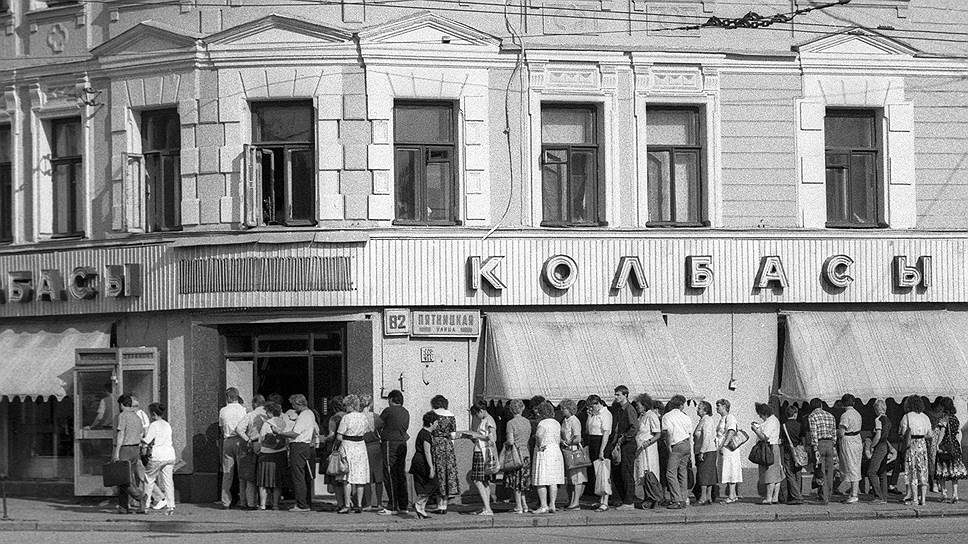
A car cost roughly five or six years of the average salary, and that was only half the matter: money alone gave no right to buy. Cars were distributed, through workplaces, waiting lists and queues, and the wait stretched for years. Vysotsky sang of a man standing in line for a car year after year, and the whole country recognized itself without footnotes. A used Zhiguli legally sold for more than a new one: an absurdity impossible in a market economy and perfectly logical in an economy of shortages.
A purchased car was cherished like a family member: a garage was valued only slightly below an apartment (Ryazanov devoted an entire comedy to the war for garage spaces), the beloved was laid up for the winter, windshield wipers were removed at night so they would not be stolen, and everything was repaired with one's own hands, since service stations were as scarce as everything else. A whole weekend culture of men grew up around the car: the inspection pit, friends, and conversations under the hood.
The Niva: an unexpected champion
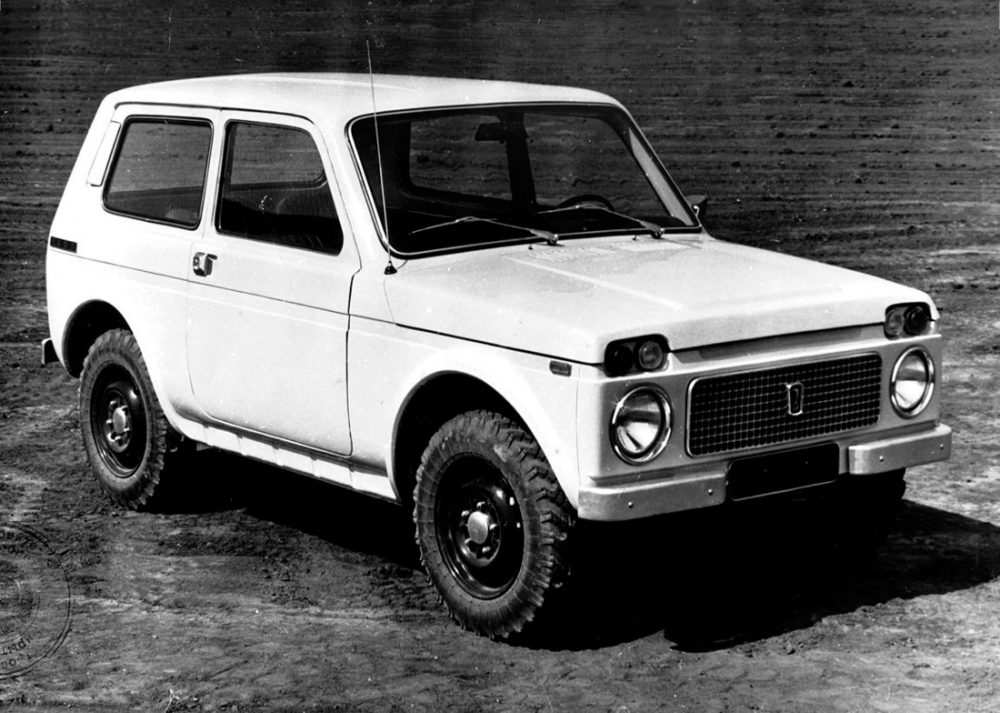
In 1977 VAZ released a car nobody expected, apparently including the plant itself. The Niva, a compact off-roader with a unibody and permanent four-wheel drive, was commissioned by Kosygin as a car for the countryside and turned out to be the invention of a new world class: in essence the first mass-market crossover, twenty years ahead of the fashion. Tested by the Urals, Siberia and the deserts of Kazakhstan, the Niva went abroad and took more than 40 percent of Europe's off-road market: one of the rarest cases of a Soviet civilian product winning in the West in open competition.
Export was a separate planet altogether. Abroad, VAZ cars sold under the Lada brand, from Britain to Canada, and export cars were assembled noticeably more carefully than domestic ones: hard currency mattered more than the gratitude of one's own customers. Soviet drivers knew about the difference and spoke of it with understandable feeling.
What the Zhiguli taught about the economy
The fate of the Soviet auto industry is a ready-made textbook of the planned economy, with all its powers and its ceiling. The system could produce leaps: buy Europe's best factory, build it on the steppe in four years, fill the country with millions of cars. What it could not do was renew itself without an order from above: with no competition, the Kopeyka and its descendants were produced for decades with cosmetic changes, and the gap with the world's carmakers, closed in 1970, was back to its old size by the 1990s.
After the collapse of the USSR the Togliatti plant lived a turbulent second life: crises, the criminal wars of the 1990s, the alliance with Renault and its rupture in 2022. The cars themselves took the turn familiar to all Soviet heritage: from a symbol of backwardness the Zhiguli and the Niva became a cult, collected, restored and filmed from Berlin to Havana, where old Ladas still carry passengers every day.
Frequently asked questions
Why does the Zhiguli look like a Fiat? Because VAZ was built under the 1966 contract with Fiat, and the first model was based on the Fiat 124. The car was deeply reworked for Soviet roads: a different engine, a reinforced body, raised suspension.
Why is the city called Togliatti? After Palmiro Togliatti, the longtime leader of the Italian Communist Party: the city built around an Italian-made factory was named for an Italian communist.
How much did a car cost in the USSR? A Zhiguli cost about five or six annual salaries, and money did not guarantee a purchase: cars were distributed through queues and lists, and the wait lasted years.
What is the Kopeyka? The popular nickname of the first model, the VAZ-2101 of 1970, from the last digit of its index. The most mass-produced and best-loved car of the Soviet era.
What made the Niva famous? It was one of the world's first mass unibody off-roaders, the forerunner of today's crossovers. In the 1980s the Niva held more than 40 percent of Europe's off-road market.
Why did used cars cost more than new ones? Because of shortages: a new car could not simply be bought, only obtained through a waiting list. A car available without the wait commanded a premium, a lawful paradox of the planned economy.
Related
- The planned economy: the system that built VAZ and could not renew it.
- Shortages in the USSR: why the wait for a car lasted years.
- Vladimir Vysotsky: the voice of the man in the car line.
- The dissolution of the USSR (1991): the boundary after which the plant began its second life.
Sources
The facts in this article can be verified against authoritative sources:
- Wikipedia, "VAZ-2101": https://en.wikipedia.org/wiki/VAZ-2101
- Wikipedia, "VAZ-2103": https://en.wikipedia.org/wiki/VAZ-2103
- Wikipedia, "Lada Niva": https://en.wikipedia.org/wiki/Lada_Niva
- Comrade Gallery, "The Soviet People's Car: The Enduring Legacy of the Lada": https://www.comradegallery.com/journal/the-enduring-legacy-of-the-lada
Where figures are estimates (waiting times, prices in salaries), we give orders of magnitude confirmed by multiple sources.