Tokamak T-3: Checking Plasma Temperature in 1968-1969
How T-3 was checked: the 1968 conference, Culham researchers, laser diagnostics and the difference between hot plasma and electricity generation.
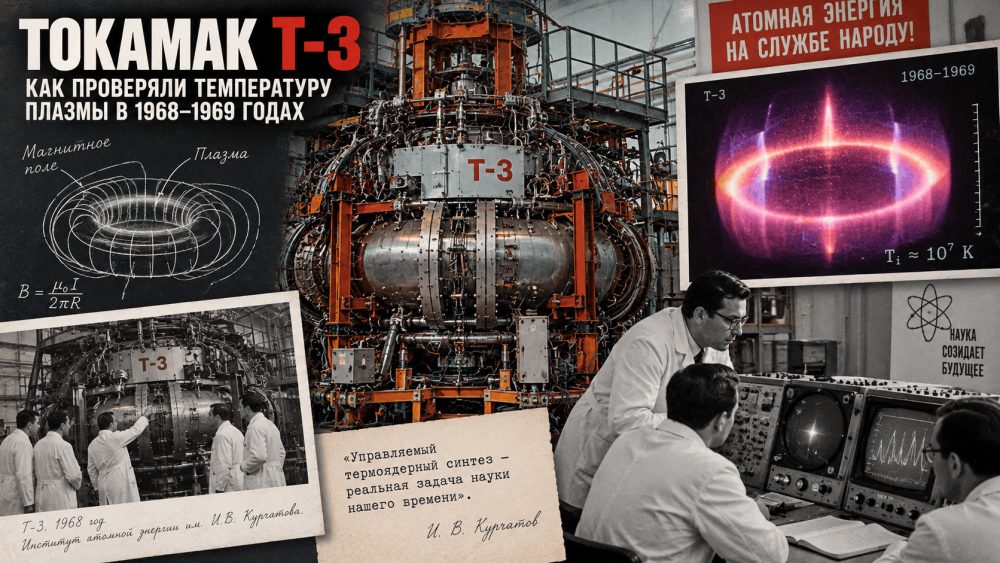
In 1968, Soviet physicists reported high plasma temperatures in tokamaks at a conference in Novosibirsk. The following year, a British team checked the electron temperature in Moscow's T-3 using a different diagnostic method. Confirmation became an important milestone in controlled fusion research.
The story is valuable less as a promise of an imminent power station than as an account of how confidence in a result is established. Unusual measurements prompted questions. A collaboration using another instrument then tested a key quantity. An additional experiment stood between the announcement and wider acceptance.
What a tokamak does
A tokamak is a plasma research device using magnetic fields and a toroidal, or ring-shaped, chamber. Plasma contains free electrons and ions. Magnetic fields influence charged-particle motion and help restrict movement towards the surrounding walls.
The US Department of Energy distinguishes laboratory magnetic confinement from the gravitational confinement found in stars. Describing fusion research as bringing a star to Earth is therefore an analogy about an energy source, not a literal account of how the apparatus works.
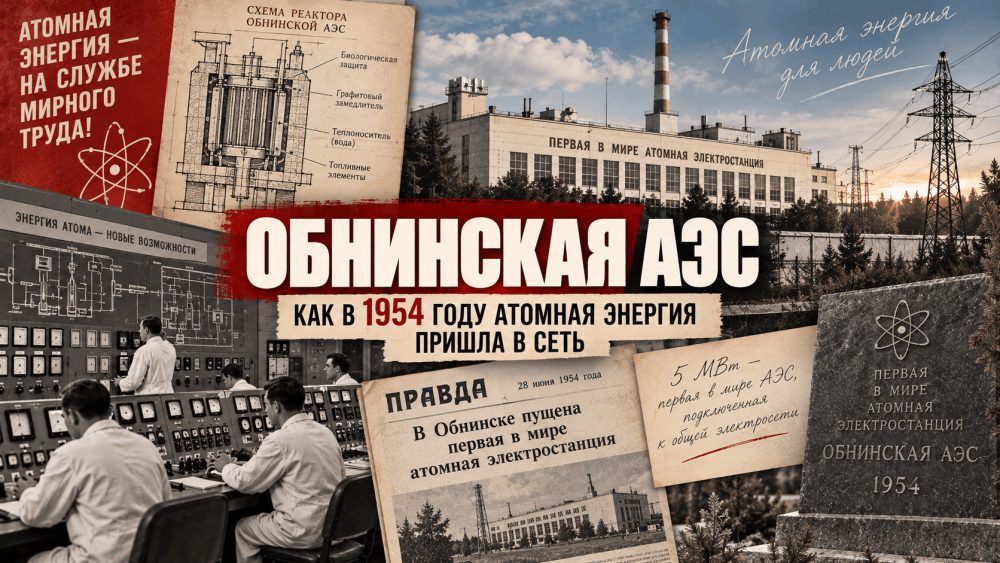
Fusion of light nuclei also differs from fission of heavy nuclei. The Obninsk nuclear power station belonged to the development of fission energy. T-3 was a research plasma device, not another electricity-generating station of the same kind.
Why the 1968 announcement raised questions
ITER's historical account traces the tokamak concept to proposals by Andrei Sakharov and Igor Tamm in the early 1950s. The year 1968 should not therefore be described as the sudden invention of the whole device. It marked an important presentation of experimental results and their international discussion.
At the conference held in Akademgorodok on 1-7 August 1968, Lev Artsimovich presented results from T-3 and TM-3. ITER's retrospective describes electron temperatures around ten million degrees. One question was whether the measurements reflected a small population of fast electrons rather than the main electron population's temperature.
Such a question is not equivalent to alleging dishonesty. An unexpected result requires examination of what an instrument actually measures and whether another explanation is possible. The relationship between a reading and a specified physical quantity matters more than the size of an impressive number.
A British diagnostic system in Moscow
According to ITER's account, Artsimovich proposed an independent check to Sebastian Pease, director of the British Culham laboratory. Specialists brought laser diagnostic equipment to the Kurchatov Institute in spring 1969. The group remembered as the Culham Five comprised Nicol Peacock, Mike Forrest, Derek Robinson, Peter Wilcock and technician Harry Jones.
The laser and optical equipment had to be adapted to the existing machine. This was not simply a visit during which observers inspected a number on another team's display. A separate diagnostic system needed to interact with the plasma in T-3.
The Cold War setting makes the cooperation historically striking. Its scientific value, however, rested on the method and comparison rather than the participants' nationalities. The original interpretation had to face a meaningful test.
What the Nature paper reported
Measurement of the Electron Temperature by Thomson Scattering in Tokamak T3 appeared in Nature on 1 November 1969. Its authors included Culham researchers and V. V. Sannikov of the Kurchatov Institute.
The openly available abstract reports electron temperatures from 100 electronvolts to 1 kiloelectronvolt and densities of 1-3 × 10¹³ per cubic centimetre. It states that the results agreed with other techniques where direct comparison was possible. This account uses that accessible abstract, not the subscription-only full paper.
An electronvolt is an energy unit. Plasma physicists often express temperature through its corresponding energy scale, so a temperature reported as 1 keV is not the machine's power output. Electron temperature and ion temperature are also distinct quantities. Referring to a plasma does not automatically establish a single common value for all its components.
These distinctions help prevent a common error in popular accounts: allowing a number to change meaning as it moves from a scientific paper into a headline. Temperature, power, density and energy are not interchangeable measurements.
Why confirmation did not mean electricity generation
High temperature is part of the fusion challenge, not a complete measure of an energy system's success. Density, energy losses and confinement conditions must also be considered. Engineering adds questions about heat removal, materials and reliable operation.
Magnetic confinement does not make the vessel or its walls unnecessary. It helps restrict direct contact between hot plasma and material surfaces, while a real machine still experiences energy flows and interactions with surrounding structures. A photograph of a bright discharge therefore says little by itself about the overall energy balance.
Nor did confirmation of the T-3 temperature mean that a reactor had begun supplying electricity to a city. A research result should be assessed against the question the experiment was designed to answer. Here, that concerned plasma parameters and confidence in their measurement.
It is useful to keep three claims separate: a hot plasma has been produced; its properties have been independently checked; a complete installation exports usable electricity. Evidence for one does not automatically establish the others.
What changed after the check
ITER's retrospective connects the confirmation with the subsequent spread of tokamak research in other laboratories. The historical claim is specific: convincing measurements strengthened confidence in an approach and encouraged further development. They did not remove every difficulty in confinement or the design of future power plants.
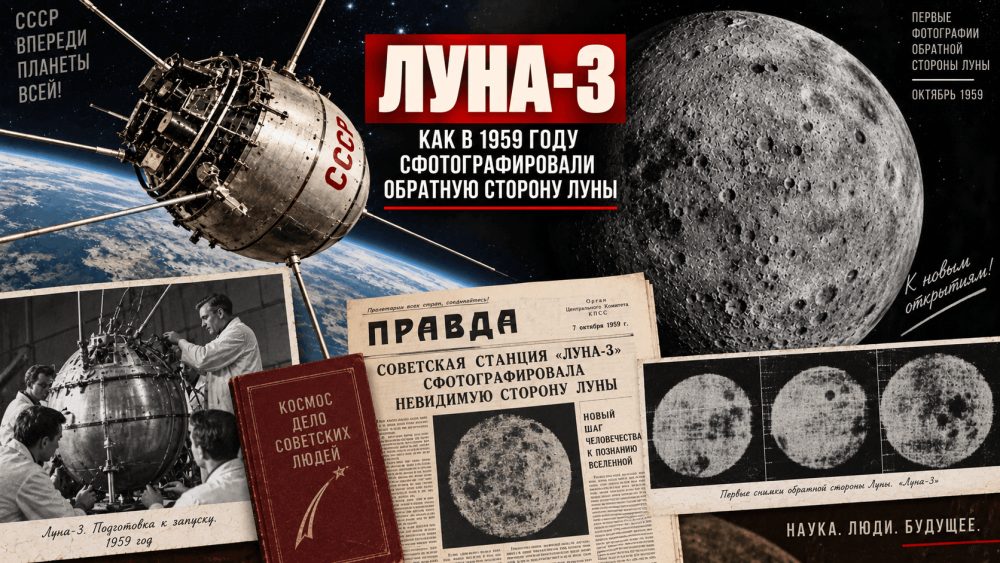
The episode can be compared with other Soviet experimental work, including Pyotr Kapitsa's low-temperature research. The temperature regimes are entirely different. The shared question for a reader is how an unusual observation becomes reliable knowledge.
The sequence in 1968-1969 is particularly clear: announcement, doubt, another diagnostic method and comparison. That makes T-3 a useful case in the history of scientific practice as well as the history of fusion.
Sources
- ITER: August 1968, A revolution in fusion: the conference and discussion of the results.
- ITER: Off to Russia with a thermometer: the British verification effort in 1969.
- Nature: Measurement of the Electron Temperature by Thomson Scattering in Tokamak T3: accessible abstract, authors and publication date.
- ITER: What is a tokamak?: the device's structure and purpose.
- US Department of Energy: Plasma Confinement: the physical meaning of magnetic confinement.
The cover is an original diagram of the verification stages, not an engineering drawing of T-3 or an experiment photograph.