The Berlin Blockade and Airlift: How a City Was Supplied
Why did the Berlin blockade begin, how did the airlift work, and why did flights continue after May 1949? Explore the logistics, dates and documents.
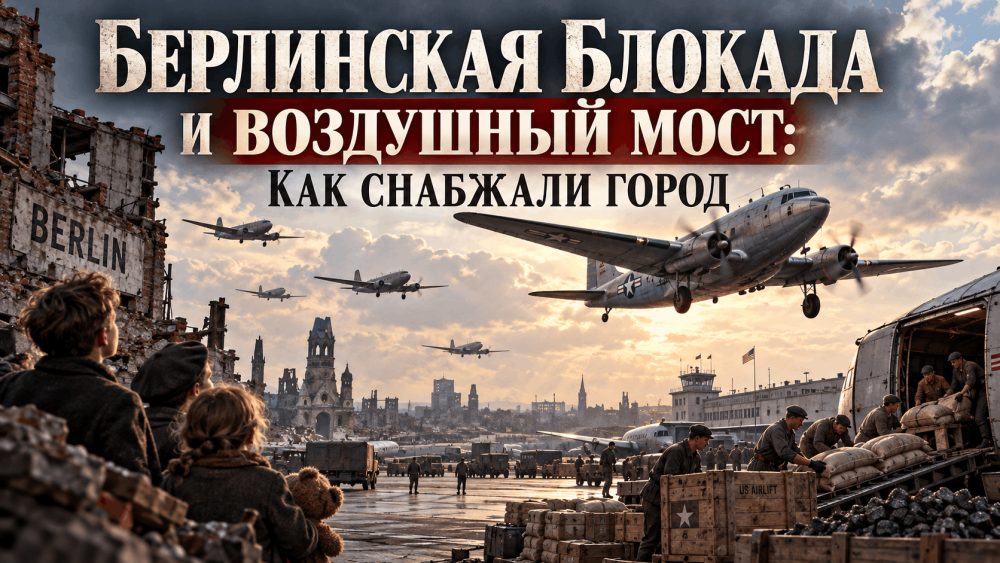
The Berlin Airlift grew out of a difficult geographical arrangement. The Western powers administered their sectors of Berlin, but the roads, railways and waterways connecting them with western Germany crossed the Soviet occupation zone. When the Soviet Union blocked the main surface links in June 1948, supplying the Western sectors became an aviation problem as well as a diplomatic one.
Aircraft carried food, but also fuel and other essentials needed to keep a city functioning. The blockade lasted from 24 June 1948 until 12 May 1949. Airlift operations began a few days after it started and continued for months after it ended. Those different timelines explain why the operation was more than an emergency response to a closed road.
Why Berlin was vulnerable
After the Second World War, Germany was administered through four occupation zones. Berlin also had Soviet, American, British and French sectors, despite lying inside the Soviet zone. The Western powers therefore depended on transport connections across territory administered by their former ally.
This arrangement had been designed for the joint occupation of defeated Germany. As relations deteriorated, it raised increasingly difficult questions. Who would shape Germany's economic recovery? Which currency would circulate? Would the occupation powers continue to govern through a common framework, or would their zones develop separately?
Currency reform in the Western zones in June 1948 was an immediate element of the confrontation. It was not its entire cause. The dispute concerned the political and economic future of Germany, with Berlin occupying an unusually exposed position within that larger disagreement.
The US State Department's Office of the Historian presents the blockade as an attempt to pressure the Western powers. That is a useful official American interpretation, rather than a substitute for the records of every participant. Our overview of the Cold War provides the wider setting.
What was blocked, and what remained open?
On 24 June, the Soviet authorities stopped the principal rail, road and water connections between the Western occupation zones and the Western sectors of Berlin. The resulting supply problem affected civilians as well as the occupying forces.
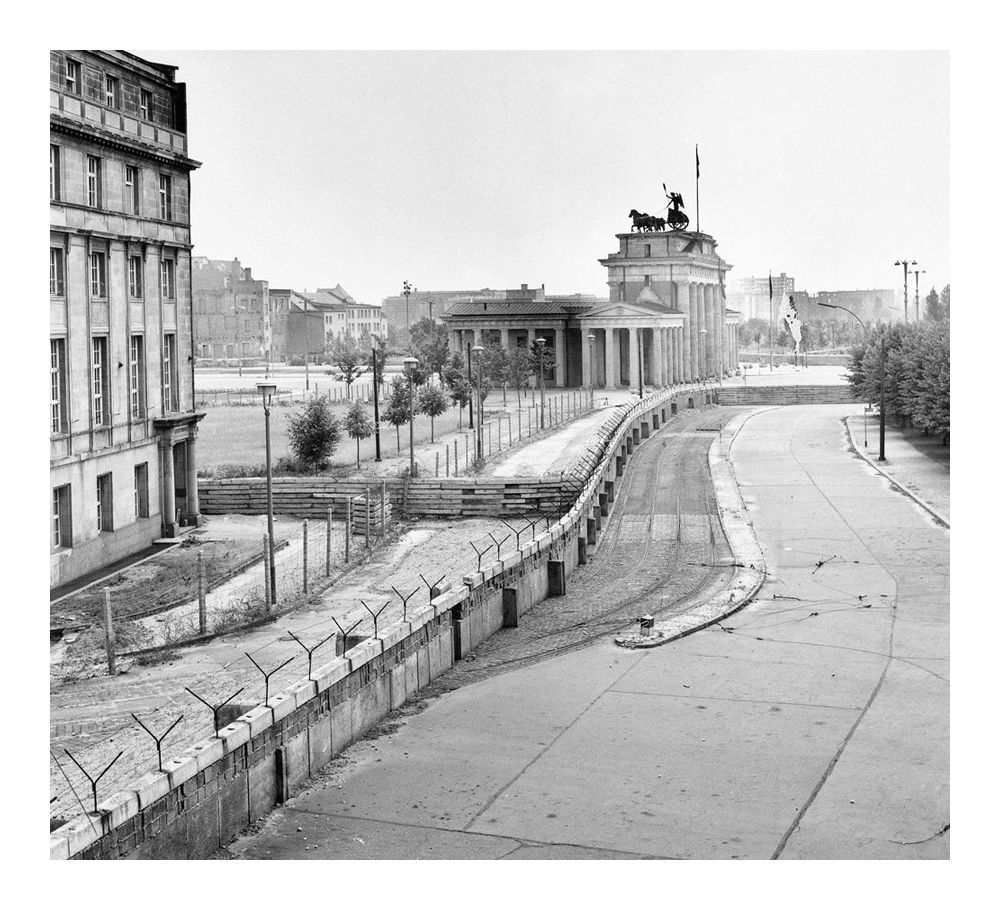
This should not be imagined as the Berlin Wall already standing around the city. The restrictions of 1948 and the border system introduced in 1961 were different events. Confusing them makes it harder to understand both the purpose of the blockade and the response to it.
Air corridors agreed in 1945 remained available to the Western powers. An agreed route, however, was only the starting point. The ability to fly an aircraft into Berlin did not automatically provide the capacity to supply a large urban population every day. That required an organised flow of cargo, aircraft and ground services.
The RAF Museum's chronology dates the start of the American Operation Vittles to 26 June and the British Operation Plainfare to 28 June 1948. Its later entries also record participation by aircrew from other Commonwealth countries. The operation should therefore not be reduced to the work of a single national air force.
From individual flights to a supply system
A successful delivery could solve an immediate shortage. A sustained airlift had to solve tomorrow's shortage as well. Its central challenge was repetition: could enough useful cargo arrive day after day, despite weather, maintenance requirements and the limits of the receiving airfields?
The supply chain involved several connected tasks. Cargo had to reach departure points, be prepared for loading, travel to Berlin, be unloaded and pass into local distribution. Aircraft then had to return to service. A delay at any stage reduced the value of capacity elsewhere in the system.
This distinction explains why simply adding aircraft was not a complete solution. More machines were useful only if loading facilities, airfield operations and maintenance could support them. The airlift became effective through the coordination of those activities, rather than through a collection of isolated flights.
Fuel also shaped the problem. Food could sustain people, but a functioning city needed energy. Coal and other ordinary supplies therefore belong at the centre of this history, alongside the more familiar humanitarian images. Military aviation was performing a task whose practical outcome was the continuation of civilian life.
The work beyond Berlin
The RAF Museum's account of Burtonwood highlights a part of the operation that is easy to miss. American C-54 transports received major maintenance at the British base, with thorough checks required after 200 flying hours. Supporting the airlift consequently involved places well beyond Berlin and its German departure airfields.
Maintenance was not an interruption that could simply be removed to gain more flights. Reliable aircraft were a condition for keeping the operation going. Pilots and aircrew produced its most visible moments, but mechanics, spare parts and organised servicing helped make the next departure possible.
For a reader looking at an airlift photograph, this changes the question. Rather than asking only where the aircraft landed, it is worth asking what allowed it to fly again. The answer leads from an individual machine to a much larger organisation.
Why not force a route overland?
Air supply allowed the Western powers to maintain their position without immediately attempting an armed breakthrough along the surface routes. It did not remove the possibility of confrontation. It offered another way to act while avoiding one particularly dangerous form of escalation.
An American document dated 1 June 1949 makes this reasoning unusually clear. Published as NSC 24/2 in Foreign Relations of the United States, it considered what to do if the blockade returned. Although the restrictions had already been lifted, the document recommended maintaining airlift readiness and building stocks. It treated armed surface convoys as carrying a risk of war.
This is evidence of American contingency planning. It is not proof that the Soviet authorities had decided to impose another blockade. Keeping that distinction intact is essential: a government's preparations reveal what it feared or considered possible, not necessarily what its opponent intended.
The document also helps explain why reopening the routes did not instantly restore confidence. A transport connection could resume while the political relationship remained deeply uncertain. The same need to separate intentions, fears and actual decisions matters when examining a later confrontation such as the Cuban Missile Crisis.
Why flights continued after 12 May
The lifting of the blockade on 12 May 1949 did not mean that the airlift stopped that day. Supplies continued to arrive for several more months, helping build reserves and reduce vulnerability if access were restricted again.
Accounts that give different finishing dates may therefore be describing different things. The end of the blockade, the continuation of stockpiling and the winding down of particular national operations should not be treated as one event without checking the scope of each source.
The outcome also cannot be explained by aviation alone. Negotiations, the decision to remain in Berlin and economic pressure all mattered. Western restrictions on trade with the Soviet zone formed part of the confrontation. The aircraft supplied a practical means of sustaining the Western position while those political and economic pressures operated.
The blockade did not secure a Western withdrawal. Yet its ending did not resolve the German question or reverse the growing division of Europe. The phrase Iron Curtain captures something of that wider separation, while the Berlin crisis shows how it was experienced through specific routes, supplies and administrative arrangements.
The blockade and the Wall were different crises
The airlift belongs to 1948 and 1949. The Berlin Wall was built in 1961. In the earlier crisis, the central issue was access between the Western sectors and the outside world, together with the conditions of the Western occupation presence. In the later one, the border system restricted the movement of people out of East Germany through Berlin.
Calling both episodes a single continuous blockade obscures what changed. Berlin remained a point of conflict, but the instruments of pressure and the situation of its inhabitants developed over time. A shared location does not make two historical events interchangeable.
Reading airlift statistics carefully
Before comparing totals, ask whose operations and which dates a figure covers. An American total is not automatically an Allied total. Flight counts, cargo weights and the duration of the operation measure different aspects of its performance. Even a reference to tons requires attention to the unit used.
The larger result is easier to grasp when the figures are connected to their purpose. Transport capacity became a tool of international policy. It helped sustain a position without an armed ground breakthrough, while leaving the underlying division unresolved. The airlift is consequently best understood through the relationship between logistics, civilian needs and the limits of diplomatic agreement.
Sources
- US Office of the Historian: the Berlin Airlift, for the political setting and course of the crisis.
- RAF Museum: world aviation chronology for 1948, for operational starting dates and widening participation.
- RAF Museum: RAF Burtonwood and the Berlin Airlift, for aircraft maintenance and continued supply flights.
- FRUS: NSC 24/2, 1 June 1949, for American planning in case the blockade resumed.
The cover is an original editorial timeline, not an archival photograph or a map of flight routes.