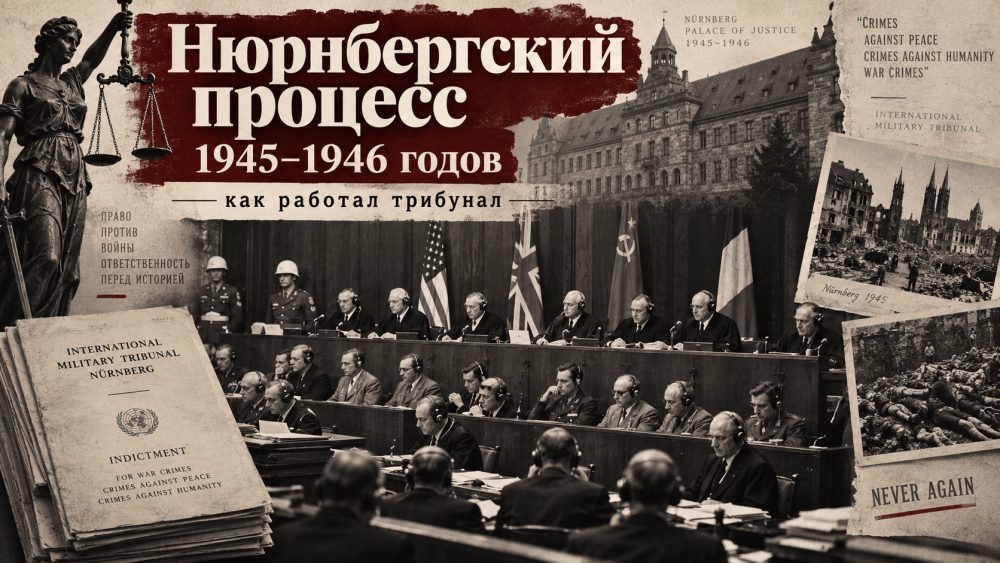
Moscow’s Victory Parade of 24 June 1945: Preparation and Ceremony
How the 24 June 1945 Victory Parade was prepared: Order No. 370, the marshals’ distinct roles, composite regiments, captured standards and rain.
The Victory Parade on Moscow's Red Square took place on 24 June 1945. It is often mentally merged with the celebrations of 9 May, although weeks of preparation separated the end of the war against Germany from the Moscow ceremony. Behind the familiar images lay participant selection, composite regiments, new uniforms, rehearsals and a carefully arranged sequence of events.
A June ceremony
The Presidential Library's archival record dates Supreme Commander Order No. 370, announcing the parade, to 22 June 1945. It appointed 24 June for the event. A printed copy is held in the Russian State Military Archive under fond 4, inventory 12, file 111, sheet 173.
The date of the document and the date of the ceremony answer different questions. The order formally appointed the parade; it does not mean that all preparation began only two days beforehand. Representatives of the fronts had already been assembled and trained. A military formation experienced in combat was not automatically a coordinated ceremonial unit ready to march through the capital.
The occasion celebrated victory over Germany in the Great Patriotic War. It did not mark the conclusion of the whole Second World War, which was still being fought in Asia. Placing the parade in this particular stage of 1945 avoids confusing a major celebration with the end of every wartime operation.
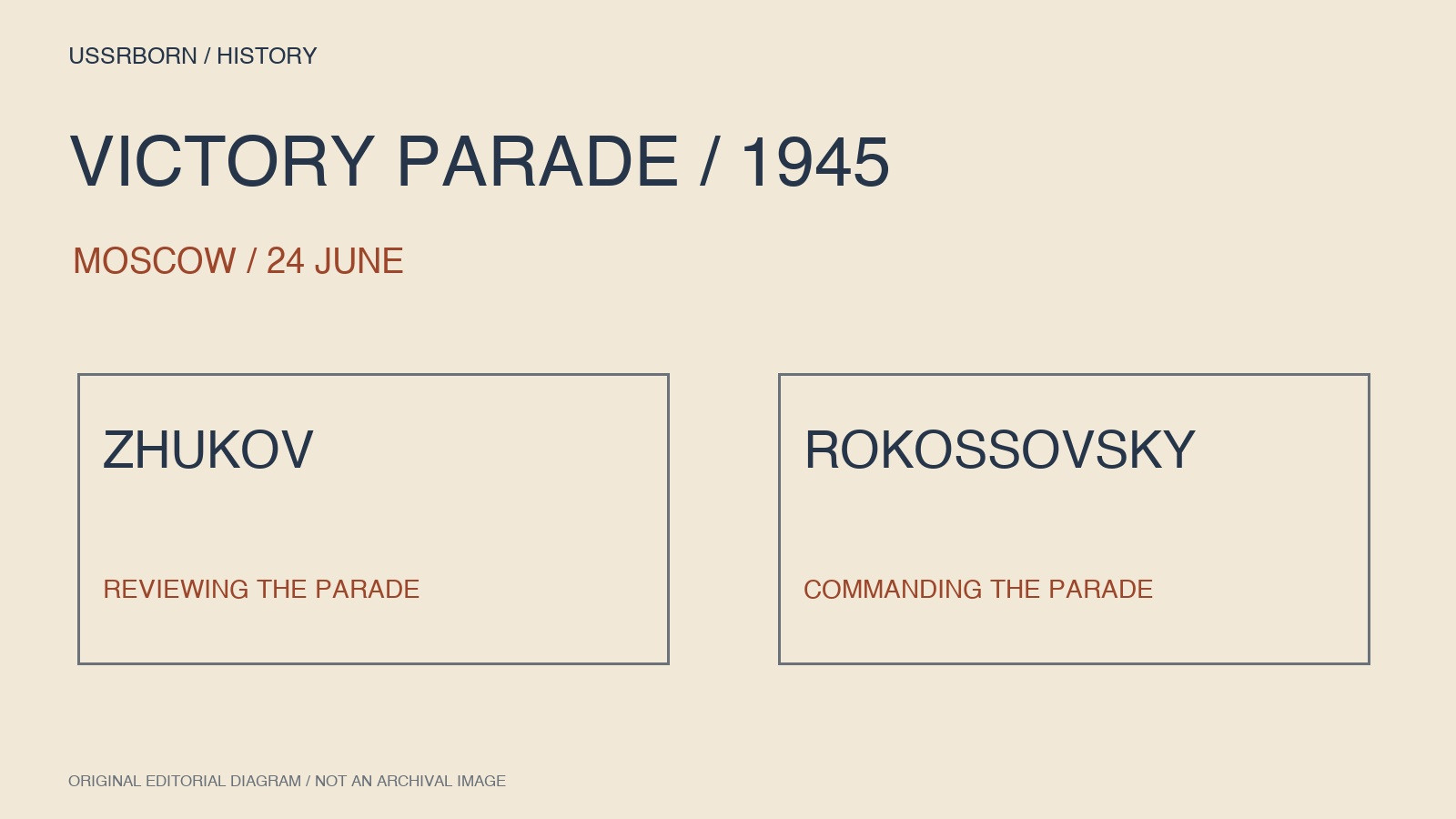
Zhukov reviewed it; Rokossovsky commanded it
The two leading ceremonial roles belonged to different marshals. Georgy Zhukov reviewed the parade, while Konstantin Rokossovsky commanded it. These were not interchangeable honorary descriptions. The commander presented the assembled troops, reported their readiness and directed the proceedings. The reviewing officer inspected the troops and addressed the participants.
A question such as who led the parade therefore needs a more precise meaning. Rokossovsky was its commander. Zhukov was the marshal who reviewed it. A famous photograph of one mounted officer cannot, by itself, explain the distribution of responsibilities.
The ceremony began at ten in the morning. Following the report and inspection, Zhukov spoke from the reviewing stand. The state anthem preceded the march-past. The sequence connected military formation, an official address and a public presentation of the victorious armed forces.
What a composite regiment represented
Entire armies did not travel to Moscow. Composite regiments brought together selected representatives of the fronts and the navy. Military educational establishments and units of the Moscow garrison also participated. The resulting formation represented the armed forces without constituting a complete list of everyone who had contributed to victory.
The State Historical Museum's account shows how carefully the units were assembled. Combat distinctions and the practical ability to take part in a drill ceremony mattered. Its presentation includes different documents and recollections, so a requirement recorded for one front should not automatically be treated as an identical rule applying without exception to every participant.
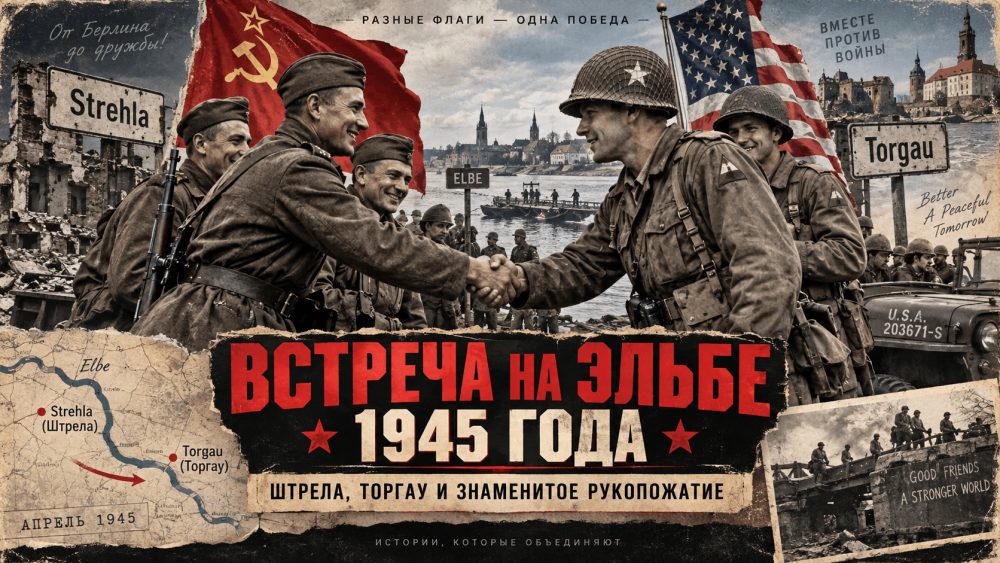
A composite regiment performed a representational task: a limited number of people stood for many formations and individual experiences. The famous image of the meeting on the Elbe works in a comparable way, representing a larger history of Allied contact. A memorable image makes an event recognizable without containing the whole event.
The work behind the spectacle
New ceremonial clothing had to be made and fitted rapidly. Workshops at the Bolshoi Theatre helped create the front standards. Carrying them required practical arrangements: a heavy standard and its staff had to remain in position while its bearer moved with the formation.
Rehearsals took place at several locations in Moscow. Infantry practiced coordinated movement, vehicles rehearsed their passage, and musicians prepared the ceremonial accompaniment. Accounts of demanding drill help reveal the parade as a further piece of organized work following frontline service, rather than only the triumphant result seen by spectators.
Combat experience and parade-ground proficiency are different skills. Marching in a perfectly aligned row does not measure the difficulty or value of a person's wartime service. It does require specific practice. The preparation explains the outward coordination preserved in newsreel footage without confusing that coordination with a judgment about military courage.
Captured standards and a changed program
One of the ceremony's best-known episodes was the casting down of two hundred captured banners and standards at the Mausoleum. It was a prepared symbolic act, not an improvised gesture. The Central Museum of the National Guard describes the selection of trophies and the preparation of the unit assigned to carry them. Their public lowering signified the enemy's defeat.
The Victory Banner associated with the Reichstag, however, was not carried in the Moscow procession on 24 June. The museum account distinguishes an initial intention from the event that actually took place. This is an important distinction when consulting records: a program describes an intended sequence, while evidence of the ceremony establishes what was carried out.
Rain also changed the plans. The aerial component and civilian demonstration were canceled. The ground ceremony proceeded, but the weather limited the intended program. An element absent from the surviving images was not necessarily absent from the preparations.
These details make the event more understandable without diminishing its importance. A large ceremony has logistics, contingencies and revisions. Seeing them prevents the polished public image from being mistaken for something that emerged fully formed without planning or adjustment.
Victory and the return to civilian life
Military equipment appeared in the parade, including vehicles produced by the Allies. The history of Lend-Lease helps explain their presence. An object visible in a ceremonial procession could embody a much larger international system of production and supply.
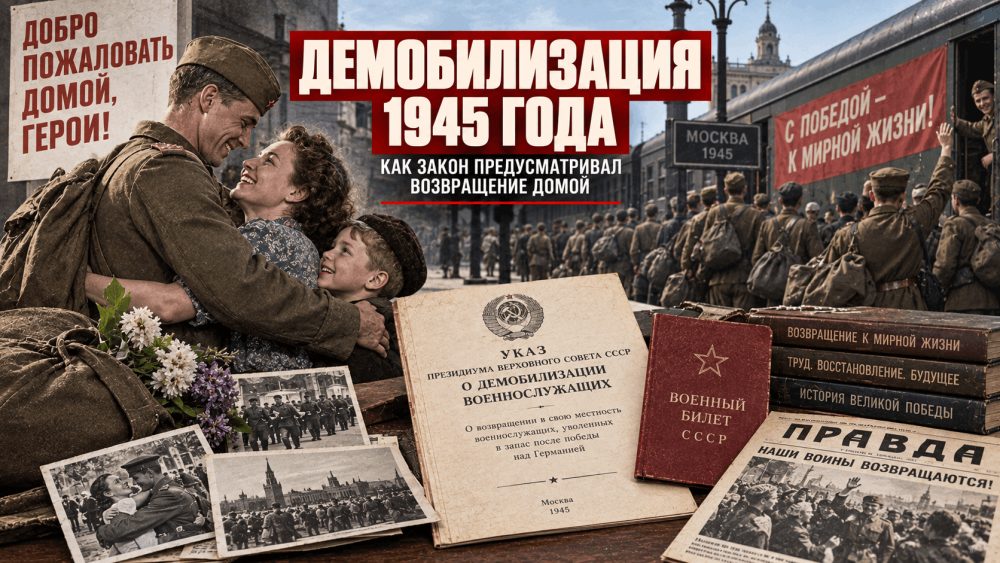
The celebration also did not mean that every serviceman immediately returned home. The 1945 demobilization law concerned a different process: staged release from service and arrangements for life afterwards. The parade, demobilization and the continuing war in the Far East belonged to the same historical moment, but they served different purposes.
The Victory Parade was a carefully organized public representation of the war against Germany's conclusion. Its records reveal both official symbolism and the practical work of participants. Reading those forms of evidence together helps distinguish the planned program, the events of 24 June and the image retained in later memory.