The Nuremberg Trial of 1945-1946: How the Tribunal Worked
How the USSR and its allies created the Nuremberg tribunal: its Charter, crimes, defence, interpretation, verdicts and distinction from later proceedings.
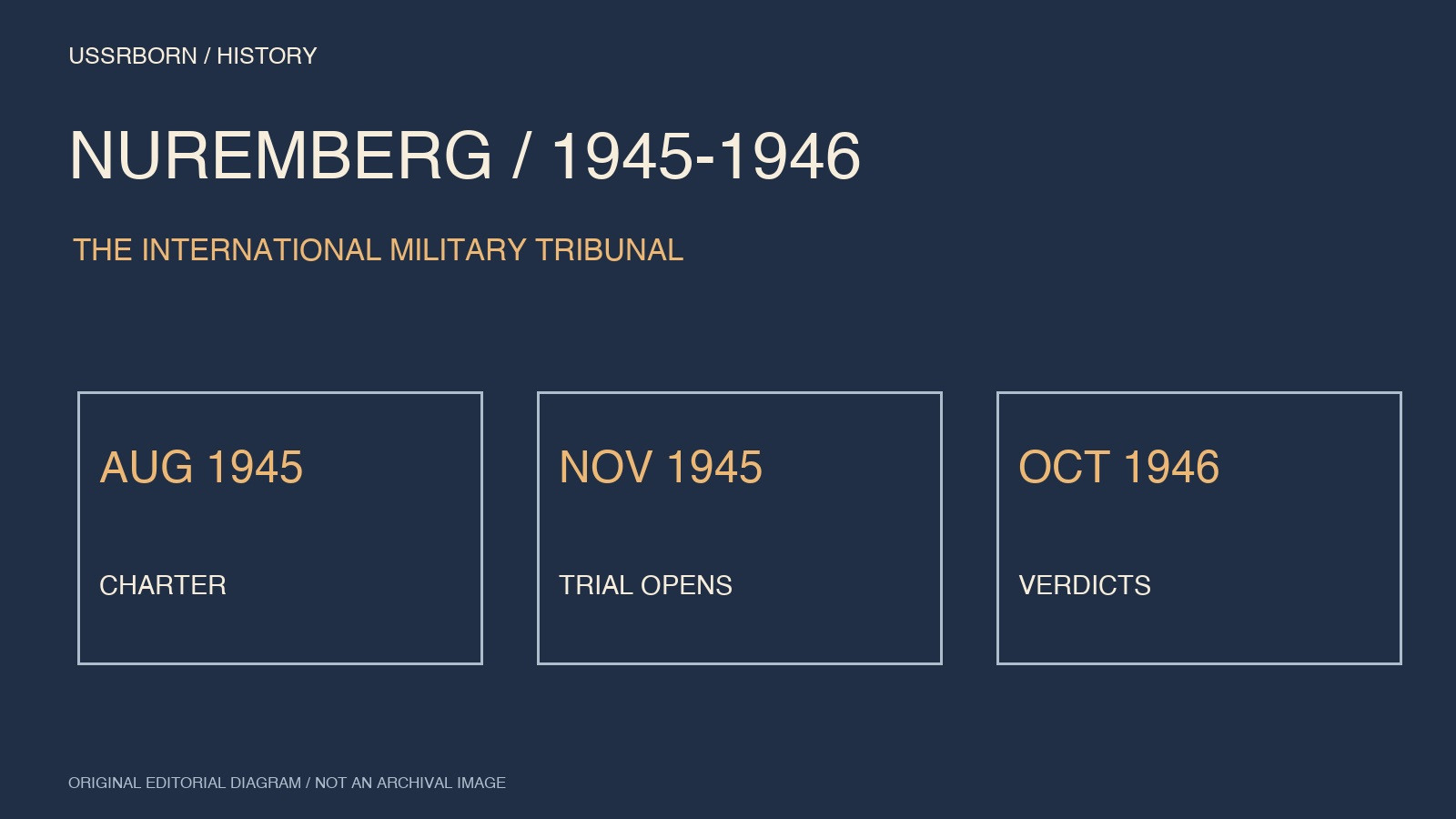
On 20 November 1945, the International Military Tribunal began hearing the case against leaders of Nazi Germany in Nuremberg. The Soviet Union, United States, United Kingdom and France had created the court together. For the Allies, it marked a transition from defeating an enemy militarily to publicly examining the responsibility of individuals for aggressive war and mass crimes.
Creating an international tribunal
The four powers signed the London Agreement and the tribunal's Charter in August 1945. The Charter defined the court's composition, jurisdiction and procedures. Each power appointed a judge and an alternate, and the prosecution was also a joint Allied undertaking.
The trial followed the end of the war in Europe, but it did not begin without preparation on the morning of its first hearing. Negotiations, procedural rules, charges and the collection of evidence preceded the proceedings. The Soviet victory in the Great Patriotic War and the trial are connected events, but they are not the same historical action.
The tribunal's first official session took place in Berlin on 18 October 1945, when the indictment was presented. The court then moved to Nuremberg. This earlier Berlin session does not contradict the familiar date of 20 November for the opening of the Nuremberg trial.
The crimes within its jurisdiction
Article 6 of the Charter identified three categories: crimes against peace, war crimes and crimes against humanity. The first concerned preparing and waging aggressive war; the second violations of the laws and customs of war; the third murder, persecution and other inhumane acts against civilians within the jurisdiction formulated by the Charter.
Participation in a common plan or conspiracy also formed part of the prosecution. The categories defined in the Charter and the counts of a particular indictment therefore describe different aspects of the case. They should not be treated as competing numerical summaries.
Article 7 prevented official status, including high government office, from serving as an automatic exemption from responsibility. Article 8 likewise provided that acting on orders did not itself remove responsibility, although it could be considered in mitigation. The issue was the conduct and role of an accused person, rather than rank alone.
These provisions help explain why the trial focused on individuals. An institutional title could establish a position, but assessing responsibility required examining what the person had done. The Charter supplied a legal framework for that assessment; the evidence was still necessary to determine a particular case.
Defence and interpretation
The accused had rights to defence, to present evidence and to question prosecution witnesses. Article 16 required proceedings to be conducted in, or translated into, a language understood by the defendant. In a court whose participants spoke different languages, that requirement affected the entire organisation of the hearing.
The United States Holocaust Memorial Museum describes the simultaneous interpretation system used in the courtroom. Alongside the original speaker, listeners could select English, Russian, French or German. Interpretation made it possible for a lawyer to follow a question, a witness to respond and a judge to assess an answer.
The history of Nuremberg consequently includes more than speeches and verdicts. It also includes interpreters, documents and the technical adaptation of the room. A public hearing needed infrastructure capable of conveying and preserving what was said. Those practical arrangements were part of the process of producing a usable judicial record.
Soviet participation and the court's limits
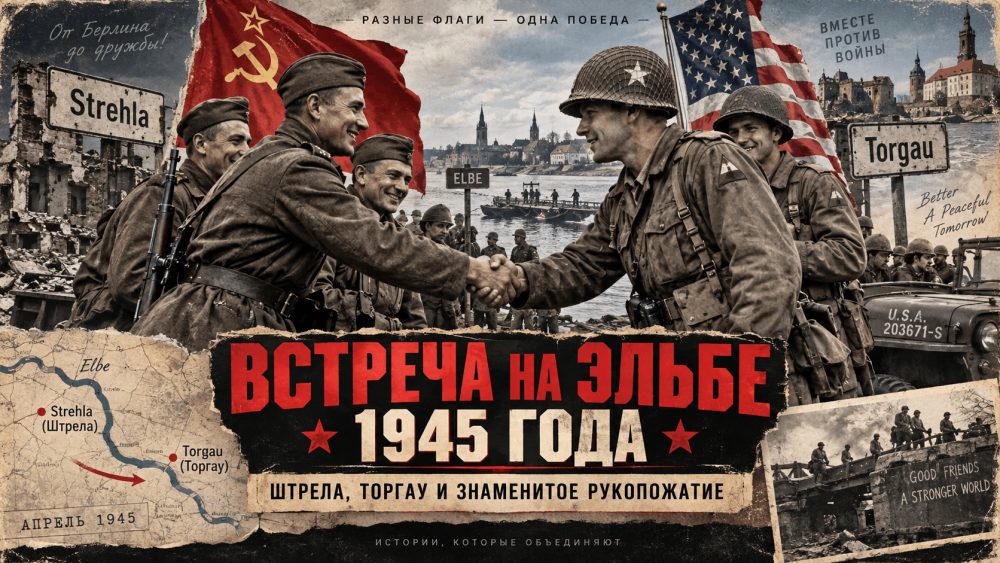
The USSR took part in establishing the tribunal, judging the case and presenting the prosecution. This cooperation continued an Allied relationship symbolised during the war by the meeting on the Elbe. Other institutions, including the United Nations, formed separate parts of the emerging postwar order.
The tribunal was not, however, a court for every crime committed by every state. Its Charter defined a jurisdiction directed at criminals of the European Axis countries. Soviet participation on the prosecution side did not mean that crimes committed by Soviet authorities were being tried or cleared by this tribunal.
The Katyn massacre of Polish prisoners by the NKVD illustrates why that distinction matters. The US National Archives also documents the Soviet effort to assign responsibility to Germany. Acknowledging that history is necessary to an honest account of the Allies. It does not negate the documented crimes of the Nazi regime. Assertions must be assessed through evidence rather than accepted or rejected solely because of the state presenting them.
Verdicts and later proceedings
The trial concluded in autumn 1946. The US Holocaust Memorial Museum records convictions of 19 of the 22 defendants and three acquittals. Twelve received death sentences, three life imprisonment and four fixed prison terms. A count of death sentences should not automatically be read as a count of executions carried out.
Twelve further trials followed in Nuremberg under American military tribunals. These must be distinguished from the joint international court of the four powers. The plural expression Nuremberg trials can refer to the wider sequence; the main trial of 1945-1946 identifies a particular proceeding.
The developing Cold War altered relations between the former allies. The trial's significance nevertheless extends beyond the state of their diplomacy. It left judicial documents, an extensive evidentiary record and experience in establishing personal responsibility for international crimes.
Nuremberg had a defined jurisdiction, a procedure and different outcomes for different defendants. It neither examined every crime of the war nor ended the history of prosecutions for Nazi crimes. Understanding its achievements requires preserving those limits as well as recognising the importance of the proceedings themselves.
The cover is an original editorial timeline, not an archival courtroom photograph or a judicial document.