The Holodomor: the famine of 1932 and 1933
Millions dead in peacetime in one of Europe's most fertile lands. What is documented about the famine of 1932 and 1933, what historians still argue about, and why the word itself was banned for half a century.
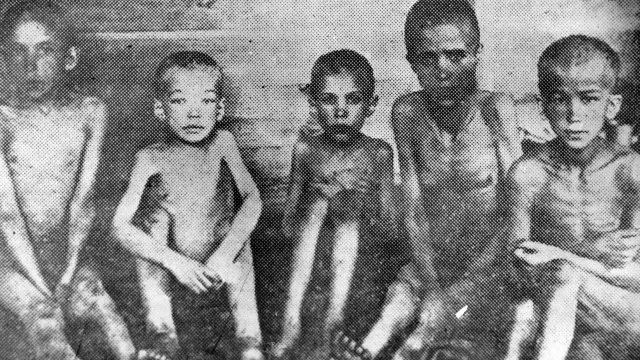
What the Holodomor was
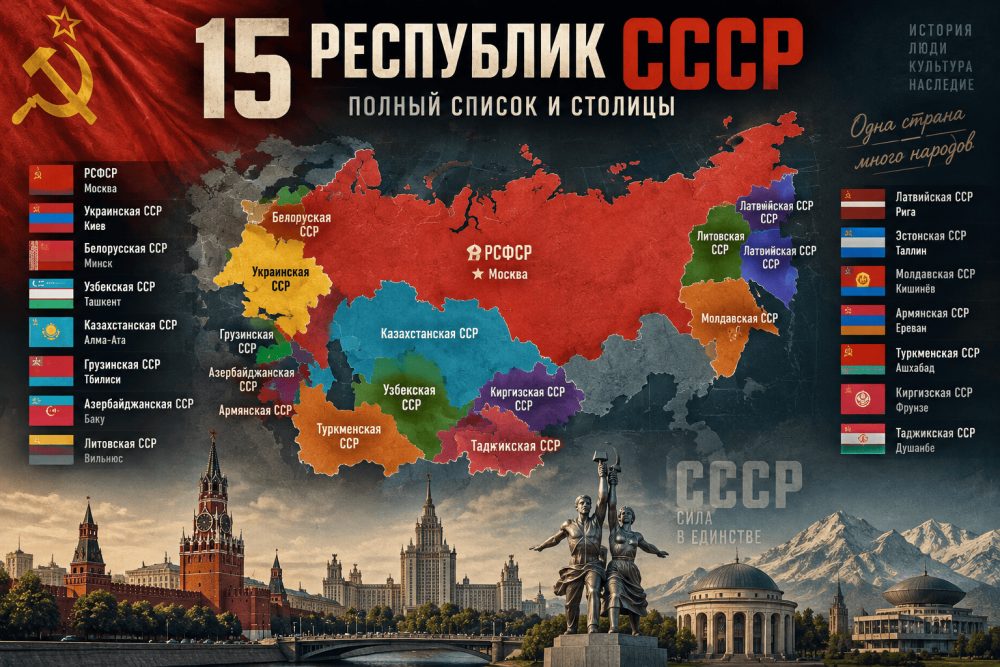
The Holodomor (from the Ukrainian for "death by starvation") was the mass famine of 1932 and 1933 in Soviet Ukraine, which took, by the most detailed demographic estimate, about 3.9 million lives; scholarly estimates generally range from 3.5 to 5 million. The famine was part of a wider catastrophe of those years that also struck Kazakhstan (where the share of the population lost was the highest), the Volga region, the Kuban and other grain regions of the USSR; total deaths in the Soviet famine of 1930 to 1933 are estimated at 5.5 to 8.7 million.
It is one of the largest humanitarian catastrophes of the 20th century and one of the hardest questions of Soviet history. We present it as our editorial frame requires: documented facts separately, scholarly disputes separately, each position attributed.
How it happened
The background was collectivization: from 1929 the state forced peasants into collective farms and "dekulakized" those who resisted, with confiscation and deportation through which millions passed (many through the Gulag). The countryside answered with resistance and falling output; meanwhile grain was the chief export commodity, the hard currency of industrialization, and procurement plans only grew.
In 1932 Ukraine was assigned procurement quotas the villages could not meet. What followed is documented in the archives. From those who failed the plan, not only grain but all food was confiscated down to the last sack; "debtor" villages were placed on blacklists with trade cut off; the notorious law of August 7, 1932, popularly called the "law of five ears of grain," punished the taking of a handful of wheat from a collective field with camp terms or execution. A directive of January 22, 1933, forbade the peasants of Ukraine and the Kuban to leave the starving districts: roadblocks sealed the roads, leaving people neither food nor the right to go and find it. The peak came in the spring and early summer of 1933: in June, demographers estimate, up to 28,000 people were dying per day. Archives and testimony record the extremes of the catastrophe, including instances of cannibalism among people driven insane by hunger.
Through all of it, the state went on disposing of grain: 4.27 million tons were extracted from Ukraine in 1932, Soviet grain exports continued, and offers of outside relief were rejected, since the authorities denied the famine's very existence. Internal reserves that Soviet documents themselves show were sufficient to feed millions did not reach the starving regions in adequate volume; limited food and seed aid in the spring of 1933 came too late for millions.
Half a century of silence
The word "famine" as applied to 1932 and 1933 was under total ban in the USSR for more than fifty years: the catastrophe was officially denied, censors scrubbed the mentions, the 1937 census that revealed the demographic hole was classified and its organizers repressed. The Western press of 1933 split: some correspondents, like Gareth Jones, wrote the truth and were hounded for it; others, like the New York Times Moscow correspondent Walter Duranty, publicly denied the famine, and his Pulitzer Prize of those years remains the object of revocation campaigns to this day.
The ban was first broken publicly in the USSR by the poet Ivan Drach in 1986, at the height of glasnost and after Chernobyl, as an example of where state silence leads. From the late 1980s the archives opened, and the famine became one of the central themes of Ukrainian national memory. Holodomor Remembrance Day is observed on the fourth Saturday of November.
The argument over the word "genocide"
Whether the Holodomor was genocide is a continuing scholarly and political dispute, and we present both frames as their proponents state them.
The genocide position (Raphael Lemkin, the author of the term itself, Robert Conquest, Anne Applebaum, Ukrainian historiography): the famine was a deliberate weapon against the Ukrainian peasantry and the Ukrainian national movement; intent is shown by the selectivity of the measures (roadblocks, blacklists, the confiscation of all food precisely in Ukraine and the Kuban), the continuation of grain exports, and the simultaneous destruction of the Ukrainian intelligentsia. Ukraine recognized the Holodomor as genocide by law in 2006; by early 2019 sixteen states and the Vatican had done likewise, the list later growing to dozens, with resolutions passed by both houses of the US Congress and the European Parliament.
The catastrophe-without-ethnic-intent position (Robert Davies, Stephen Wheatcroft, J. Arch Getty): the famine was a monstrous but unintended consequence of collectivization and procurement policy, striking all grain regions including Russian and Kazakh ones; the regime's cruelty is beyond doubt, but these historians consider the evidence of a specific intent to destroy Ukrainians as a group insufficient. The position of present-day Russia recognizes the famine as a common tragedy of the Soviet peoples and rejects the genocide designation.
There is also a crucial agreement between the schools, which we record: the famine was man-made, caused by government decisions rather than nature; the authorities knew what was happening; and the authorities chose procurement and export over saving people. No serious scholarly school disputes the Soviet state's responsibility for millions of deaths; the argument concerns legal classification, not guilt.
Memory
For Ukraine the Holodomor became one of the foundations of national identity: the memorial in Kyiv, the museums, the annual minute of silence and the candle in the window on the day of remembrance. The famine of the 1930s is also commemorated in Kazakhstan, where the catastrophe cut down an enormous share of the nation, and in regions of Russia. For world scholarship the Holodomor is the textbook case of what the union of utopia, terror and silence does to human beings; for our project it is the point where the story of the Soviet era must be at its most documentary. Three figures in place of a conclusion: 3.9 million dead by the best estimate; 28,000 deaths a day at the peak; 54 years of official silence.
Frequently asked questions
What does the word Holodomor mean? "Death inflicted by starvation": the term attached itself to the mass famine of 1932 and 1933 in Soviet Ukraine and is capitalized in Ukrainian and world usage.
How many people died in the Holodomor? The most detailed demographic estimate is about 3.9 million in Ukraine; the scholarly range is 3.5 to 5 million. Total deaths in the Soviet famine of 1930 to 1933, including Kazakhstan and Russian regions, are put at 5.5 to 8.7 million.
Was the famine man-made? Yes, and on this the scholarly schools agree: the causes were procurement policy, food confiscation and the travel ban, not natural factors. The dispute concerns whether the intent was directed at Ukrainians as a group.
Is the Holodomor recognized as genocide? By Ukraine, in law since 2006; by dozens of states, the Vatican, the US Congress and the European Parliament, in resolutions. Some historians, and the position of Russia, dispute this classification while recognizing the famine as a tragedy without ethnic intent.
Why was the famine silenced for so long? The USSR officially denied its existence: mentions were censored for over 50 years, and the 1937 census was classified. The subject was first raised publicly in the USSR only in 1986.
Did only Ukraine starve? No: the catastrophe of 1930 to 1933 also struck Kazakhstan (the heaviest losses as a share of population), the Volga region, the Kuban and other areas. The term Holodomor refers above all to the Ukrainian part of the tragedy.
Related
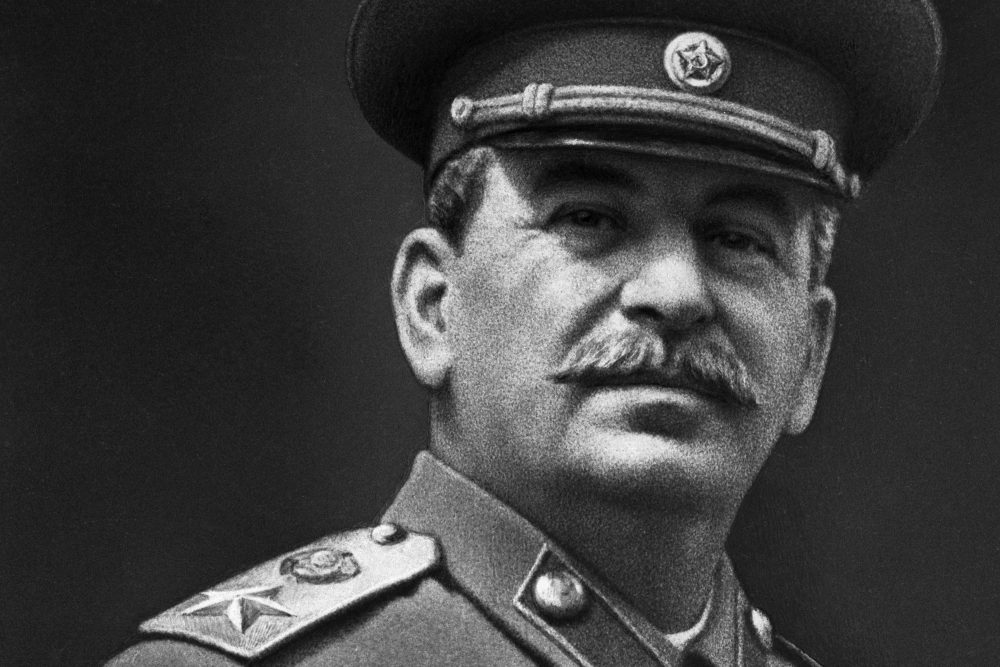
- Joseph Stalin: the country's ruler in the years of the catastrophe.
- The Gulag: where dekulakization and the "law of five ears" led.
- The planned economy: the industrialization paid for by the countryside.
- Perestroika and glasnost: the time when the silence ended.
- The kolkhoz — the system for whose sake the village was broken.
Sources
The facts in this article can be verified against authoritative sources:
- Center for Holocaust and Genocide Studies, University of Minnesota, "Holodomor": https://cla.umn.edu/chgs/holocaust-genocide-education/resource-guides/holodomor
- Encyclopaedia Britannica, "Holodomor" (article by Anne Applebaum): https://www.britannica.com/event/Holodomor
- Internet Encyclopedia of Ukraine, "Famine-Genocide of 1932-3": https://www.encyclopediaofukraine.com/display.asp?linkpath=pages\F\A\Famine6Genocideof1932hD73.htm
- Wikipedia, "Holodomor genocide question": https://en.wikipedia.org/wiki/Holodomor_genocide_question
- House of Lords Library (UK Parliament), "Ukrainian Holodomor": https://lordslibrary.parliament.uk/ukrainian-holodomor/
All figures are given as ranges from academic research; the classification dispute is presented with attribution to both scholarly schools.