The nomenklatura: the class that officially did not exist
One and a half percent of the population, quietly ruling the rest. Special shops without lines, state dachas behind high fences, and posts passed on almost by inheritance. The story of the ruling class of a country that officially had no classes at all.
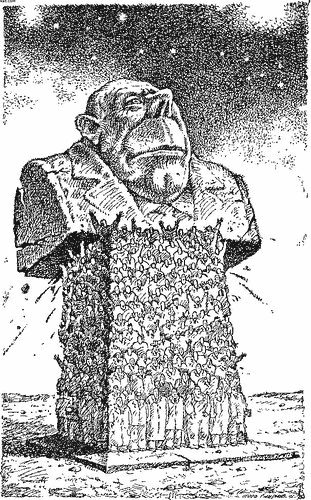
What the nomenklatura was
The word "nomenklatura" came from the Latin for a simple list of names, and in the USSR it became the name of the ruling class, the very thing a classless society could not have. Originally it was a bureaucratic term: a list of positions whose appointments were approved by party bodies, plus a list of the people who filled them. The district committee secretary, the factory director, the newspaper editor, the ambassador, the general, every key chair in the country belonged to the nomenklatura and was assigned from above.
But over time a phenomenon rose behind the dull word. The people on those lists formed a closed, privileged stratum, by the estimate of the historian Michael Voslensky about one and a half percent of the population, who held all power in their hands and lived in a separate reality inaccessible to the rest. A country of workers and peasants had acquired an aristocracy of its own, and this is perhaps the central paradox of Soviet history: a society that abolished classes built one of the harshest class orders of the 20th century.
How a list grew into a class
The nomenklatura's roots reach into the very design of Bolshevism. Lenin did not trust the spontaneous will of the workers and built the party as a "vanguard," a narrow group of professional revolutionaries leading the masses behind it. After the revolution, this vanguard became the sole power, and someone had to place people in the posts of an enormous country. A gap between the "rulers" and the "ruled" appeared in the first years already, and even Lenin's own comrades wrote about it with alarm.
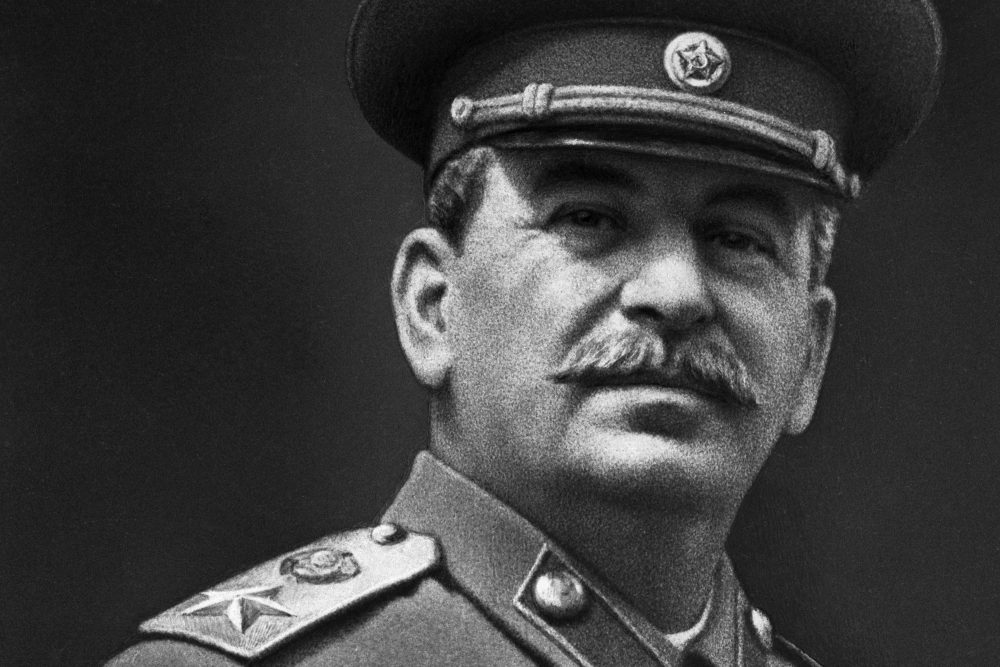
The system took shape in the early 1920s. The Twelfth Party Congress of 1923 fixed party control over appointments, and the nomenklatura mechanism soon formed: secret lists of positions and candidates, controlled by the party apparatus. A post on these lists could not be won by competition or by a vote from below, only by a decision from above. Thus power over cadres became the chief instrument of power itself, and the man who understood and used this before others was Stalin: the post of General Secretary, at first a technical-looking job, gave him control over appointments and, through them, over the whole party.
A world behind a high fence
The point of belonging to the nomenklatura lay not only in power but in a way of life that, in a country of shortage, looked like another planet. While the ordinary citizen stood in lines, the nomenklatura lived in a parallel world of plenty, fenced off from outside eyes.
That world had its own infrastructure. Special distributors and closed store sections where scarce goods and delicacies were sold without lines at token prices. State dachas behind high fences, government-owned but held for life as long as you held your post, unlike the people's six sotki. Chauffeured official cars, special clinics and closed hospitals with Western medicines, personal pensions, sanatoriums barred to ordinary mortals. Separate money opened separate doors: access to hard-currency goods and checks worked just as in the Beryozka shops described in the article on the Soviet ruble. Even education was its own: nomenklatura children studied in special schools and the best universities and traveled abroad, which most people would never see.
The privileges were not advertised, and that was the whole trick. Officially everyone was equal, and the abundance hid behind unmarked doors and blank fences in the pine forests outside Moscow. The class existed, yet as if it were absent.
The class that appointed itself
The nomenklatura had a trait that linked it to the old aristocracy: it sought to reproduce itself. Formally there was no inheritance of posts, but in practice connections, special schools and acquaintances worked as a class elevator: the children of bosses became bosses more often than others. The stratum closed in on itself, and entering it from the street grew ever harder.
The nomenklatura's golden age was the era of Brezhnev. His policy of "stability of cadres" meant that whoever reached the top once stayed there into old age: officials were almost never removed, and the nomenklatura turned into a gerontocracy quietly aging in its chairs. For the country this meant stagnation; for the class itself, the security it had always dreamed of: power without the risk of losing it. The KGB guarded this order and was part of it, since the top of state security belonged to the same nomenklatura.
Djilas, Voslensky and the "new class"
The first to call things by their names were the disillusioned insiders. In 1957 the Yugoslav communist Milovan Djilas, one of his country's leaders, published The New Class, arguing that the communist revolution had not abolished exploitation but merely replaced the old ruling class with a new one, the party bureaucracy. For that book Djilas was sent to prison.
The main work on the Soviet case was written by Michael Voslensky, a historian who had worked inside the system and knew it from within. His book Nomenklatura circulated in samizdat from 1970 and, after he left for the West, was published in 1984 with a preface by that same Djilas, becoming a classic. Voslensky showed that the nomenklatura was not a distortion of socialism but its logical outcome, a direct consequence of Lenin's idea of the vanguard. Literature had said it earlier and more briefly: Orwell's Animal Farm, where the revolutionary pigs gradually turn into the new masters, was about exactly this, and for exactly this reason it was banned in the USSR.
The nomenklatura outlived the country
The story's ending is paradoxical: the class born of the Soviet system survived its death perhaps better than anyone. When the USSR collapsed in 1991, the nomenklatura did not vanish, it converted. People who had power, connections and access to resources found themselves ideally placed to become owners in the new market reality: recent directors became owners of factories, party and Komsomol functionaries became bankers and politicians. A substantial part of the post-Soviet elite came straight out of the Soviet nomenklatura, and some of its privileges, established back under Stalin, outlived socialism itself.
The honest verdict is this. The nomenklatura was the underside of Soviet equality, the proof that power creates inequality even where inequality is outlawed. This does not cancel the sincerity of those who believed in the idea, nor does it turn every official into a villain: the system was simply built so that it paid to be at the top. But the fact remains: a country at war with classes was governed, to its last day, by a class that officially did not exist.
Frequently asked questions
What was the nomenklatura, in simple terms? The ruling stratum of the USSR: a list of key posts whose appointments the party controlled, and the people who held them. Over time, a closed privileged class of about one and a half percent of the population.
Where did the word "nomenklatura" come from? From the Latin nomenclatura, "a list of names." In the USSR it meant the lists of posts and candidates, and then the whole ruling stratum. The historian Michael Voslensky fixed the term in his book.
What privileges did the nomenklatura have? Special distributors and closed shops without lines, state dachas, official cars, special clinics, sanatoriums, personal pensions, access to hard-currency goods and foreign travel, and special schools for their children.
What was the "new class"? A concept of the Yugoslav communist Milovan Djilas (a 1957 book): the communist party bureaucracy as a new ruling class that replaced the old one. For the Soviet case, the phenomenon was described in detail by Michael Voslensky.
Were posts inherited? Formally no, but in practice the stratum reproduced itself: connections and special schools helped nomenklatura children build careers. Under Brezhnev, "stability of cadres" closed the circle further.
What happened to the nomenklatura after the USSR fell? It largely survived, converting power and connections into property and posts: many members of the Soviet elite became businessmen and politicians in the new Russia and other post-Soviet countries.
Related
- Vladimir Lenin: the idea of the "vanguard" from which the nomenklatura grew.
- Leonid Brezhnev: "stability of cadres" and the class's golden age.
- The Soviet ruble: the special money of the parallel world of privilege.
- The dacha: the elite's state dachas against the people's six sotki.
Sources
The facts in this article can be verified against authoritative sources:
- New World Encyclopedia, "Nomenklatura": https://www.newworldencyclopedia.org/entry/Nomenklatura
- Foreign Affairs, review of Michael Voslensky, "Nomenklatura: The Soviet Ruling Class": https://www.foreignaffairs.com/reviews/capsule-review/1984-12-01/nomenklatura-soviet-ruling-class
- Communist Crimes (Olev Liivik), "The Elite and Their Privileges in the Soviet Union": https://communistcrimes.org/en/elite-and-their-privileges-soviet-union
- Cahiers du monde russe (Moshe Lewin), "Rebuilding the Soviet Nomenklatura 1945-1948": https://shs.cairn.info/revue-cahiers-du-monde-russe-2003-2-page-219?lang=en
- Encyclopaedia Britannica, "Nomenklatura": https://www.britannica.com/topic/nomenklatura
Estimates of the stratum's size and character differ among researchers; we give the stable figures and name the authors of the key concepts.