Soviet ballet: an art that became a weapon
London in 1956, weeping over Ulanova. Nureyev running through a Paris airport. And Swan Lake on television instead of news about the coup. How ballet became the USSR's greatest cultural export and its most honest metaphor.
Why ballet, of all things
The Soviet Union had two unanswerable arguments in its quarrel with the West: space and ballet. The rockets proved its strength; the ballet proved its soul. A country short of sausage maintained, for decades, the finest ballet school on the planet, and it was entirely sincere in its pride at the paradox.
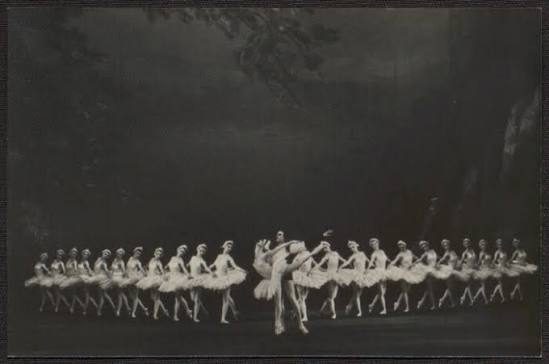
Ballet came to the USSR as an inheritance from the empire: the Bolshoi traced its history to 1776, and the Mariinsky in St. Petersburg (renamed the Kirov in 1935) had been the stage of Petipa and Pavlova. After the revolution a question hung over this "court art": what do proletarians need princes and swans for? The answer came quickly: because it is the best in the world, and the best now belongs to the people. Bolshoi tickets were handed out to workers, and yesterday's peasants watched Swan Lake from the imperial boxes. Ballet did not merely survive Soviet power. It became its showcase, its diplomacy and, in the end, its symbol down to the very last day.
The Vaganova school
The foundation of everything was one woman. Agrippina Vaganova, formerly a Mariinsky dancer, took over the Leningrad ballet school after the revolution and over a quarter century turned teaching from a craft into a science. Her method, set out in a 1934 textbook, broke classical dance down into a system: how the back breathes, how the arm continues the torso's movement, in what order a body learns difficulty. Ballet is still taught by this system, and not only in Russia: the Vaganova method became the world standard, and the academy bears her name.
The school's first great star was Galina Ulanova. The writer Alexei Tolstoy called her "an ordinary goddess," and contemporaries agreed that ballet had never seen such an actress. After one of her performances, Stalin personally ordered her transfer from Leningrad to the Bolshoi. Thus the Soviet model took shape: the state takes away art's freedom and pays for it with resources, status and the attention of the man at the top.
London, 1956: four weeks of triumph
For decades Soviet ballet simmered in its own pot: the Iron Curtain worked in both directions. The Thaw changed everything. On September 29, 1956, 150 artists of the Bolshoi landed in London's fog: the company's first tour of the West in history, four weeks at Covent Garden.
What happened next is compared by historians to the effect of Diaghilev's seasons at the start of the century. London lost its head: ticket lines formed overnight, and the critics ran out of superlatives. The greatest triumph belonged to Ulanova, then 46: after her Juliet the audience rose and would not let the dancers go through dozens of curtain calls. The Cold War had acquired a new front, and on this one the USSR won unconditionally. Moscow understood instantly: tours by the Bolshoi and the Kirov became a standing instrument of foreign policy. On the New York black market, Bolshoi tickets went for the price of a month's wages.
The diplomacy worked inward too: the export hit was Grigorovich's Spartacus, in which the rebellious slaves fought Romans who goose-stepped and raised a very recognizable salute. Audiences read the message without a translator.
The defectors
The showcase had a price, and the artists themselves paid it. Every touring company traveled under KGB supervision: plainclothes escorts, passports held by the seniors, families staying home as unspoken collateral. And yet it was the dancers who tore the loudest holes in the curtain.
On June 16, 1961, at Le Bourget airport in Paris, the Kirov soloist Rudolf Nureyev, who was being sent home early, broke free at the last second and ran to the French police shouting "Protect me!" It was the first defection of a Soviet star of that magnitude, and it made Nureyev a legend twice over: as a dancer and as a symbol. In 1970 the Kirov ballerina Natalia Makarova stayed behind in London; in 1974 Mikhail Baryshnikov did the same in Toronto. All three became towering figures of world ballet, and until perestroika all three officially did not exist for the Soviet press: they were erased from programs and encyclopedias.
The defections posed a question the system could not solve. Ballet was needed as a showcase, a showcase needs tours, and every tour is an open door. The door was never closed: the showcase mattered more.
Greatness and the cage
The honest verdict on Soviet ballet splits in two, like everything in this story. On one side stands the summit: the Vaganova school, Ulanova and Plisetskaya, Prokofiev and Khachaturian writing ballets like symphonies, a technique the world still measures itself against. No state anywhere invested comparable resources in this art.
On the other side stands the cage in which that greatness lived. Repertoire was approved by officials, experiment was smothered as "formalism," Shostakovich was savaged for his ballets as for his operas. Plisetskaya was barred from foreign travel for six years on KGB suspicions. The best left because at home they were told not only how to dance but what. Both truths belong to the same stage, and neither can be subtracted from the other.
Swan Lake as the finale
Soviet ballet has an exact closing scene, staged by history itself. On August 19, 1991, the day of the coup, every television channel in the country played Swan Lake for hours instead of the news: a regime losing its words hid behind its most beautiful facade. Ever since, "Swan Lake on television" has meant one thing in the post-Soviet vocabulary: something is happening that the authorities do not want to discuss. The art that had served as the state's showcase for seventy years became, in that state's final days, its screensaver. No playwright could have written a more honest metaphor.
The school itself outlived both the coup and the country: the Bolshoi and the Mariinsky remain world stages, the Vaganova Academy teaches by the same system, and "Russian ballet" as a concept has long needed no translation.
Frequently asked questions
Why was ballet so important to the USSR? It was the country's chief cultural export and proof of the system's superiority: the USSR showed the world not only rockets but the finest art on earth. Bolshoi and Kirov tours served as instruments of diplomacy.
What is the Vaganova method? The system of teaching classical dance developed by Agrippina Vaganova in Leningrad and set out in her 1934 textbook. It became the foundation of ballet training in the USSR and a world standard; the academy in St. Petersburg bears her name.
Who was Galina Ulanova? The greatest ballerina of the Soviet era, trained by the Leningrad school and transferred to the Bolshoi on Stalin's personal order. Her London performances of 1956, at the age of 46, became a world triumph.
Which Soviet ballet artists defected to the West? The most famous: Rudolf Nureyev (Paris, 1961), Natalia Makarova (London, 1970) and Mikhail Baryshnikov (Toronto, 1974). All three became stars of world ballet and were erased from official Soviet history.
What do Swan Lake and the coup have to do with each other? On August 19, 1991, during the coup attempt, television broadcast Swan Lake instead of the news. Since then, ballet on the air has meant, across the post-Soviet countries, a political crisis the authorities will not discuss.
Does the Soviet ballet school exist today? Yes: the Vaganova Academy, the Bolshoi and the Mariinsky all operate, teaching follows the same system, and the Russian school remains among the world's leading ones.
Related
- The Khrushchev Thaw: the years that opened ballet's road to the West.
- The Cold War: the front on which ballet won unconditionally.
- The KGB: the plainclothes escorts on every tour.
- The dissolution of the USSR (1991): a finale set to Tchaikovsky.
Sources
The facts in this article can be verified against authoritative sources:
- Encyclopaedia Britannica, "Ballet: The Soviet scene": https://www.britannica.com/art/ballet/The-era-of-the-Ballets-Russes
- Encyclopedia.com, "Ulanova, Galina (1910-1998)": https://www.encyclopedia.com/women/encyclopedias-almanacs-transcripts-and-maps/ulanova-galina-1910-1998
- Cold War History (academic journal), "Ballet, propaganda, and politics in the Cold War: the Bolshoi Ballet in London... 1956": https://www.tandfonline.com/doi/abs/10.1080/14682745.2018.1468436
- CBS News, "Today In History: Dancer Defects" (Nureyev's escape): https://www.cbsnews.com/news/today-in-history-dancer-defects
- TheCollector, "9 Russian and Soviet Artists Who Influenced Ballet": https://www.thecollector.com/russian-soviet-artists-ballet/
Where assessments diverge (the summit of art or art in a cage), we present both sides of the same stage.