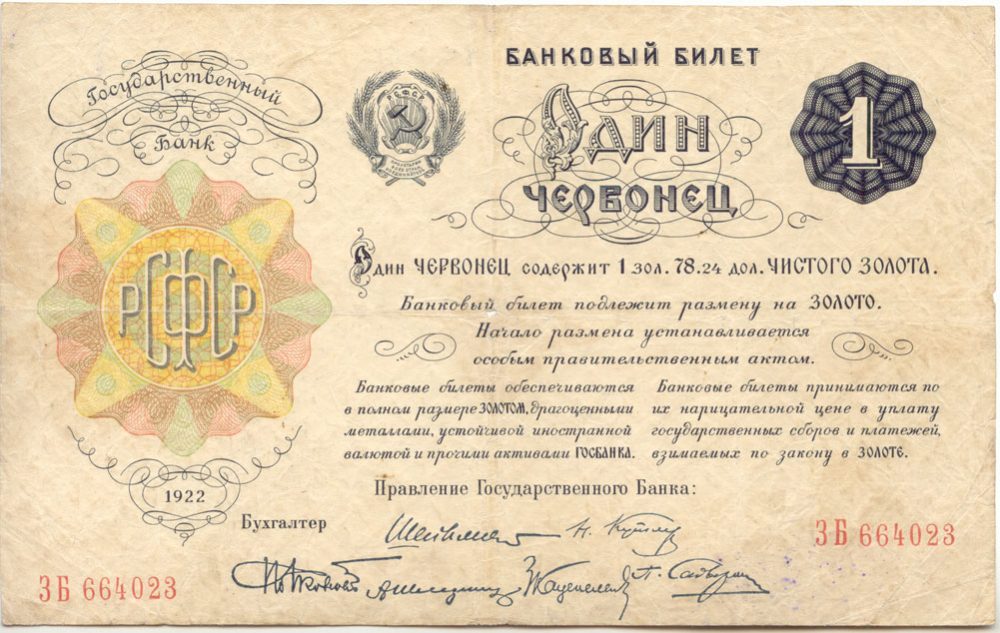
Wages and Prices in the USSR: What Could a Soviet Salary Buy?
What Soviet people earned, what bread, meat, televisions and cars cost, and why a low official price did not always mean an easy purchase. A year-by-year guide grounded in Soviet statistical yearbooks.
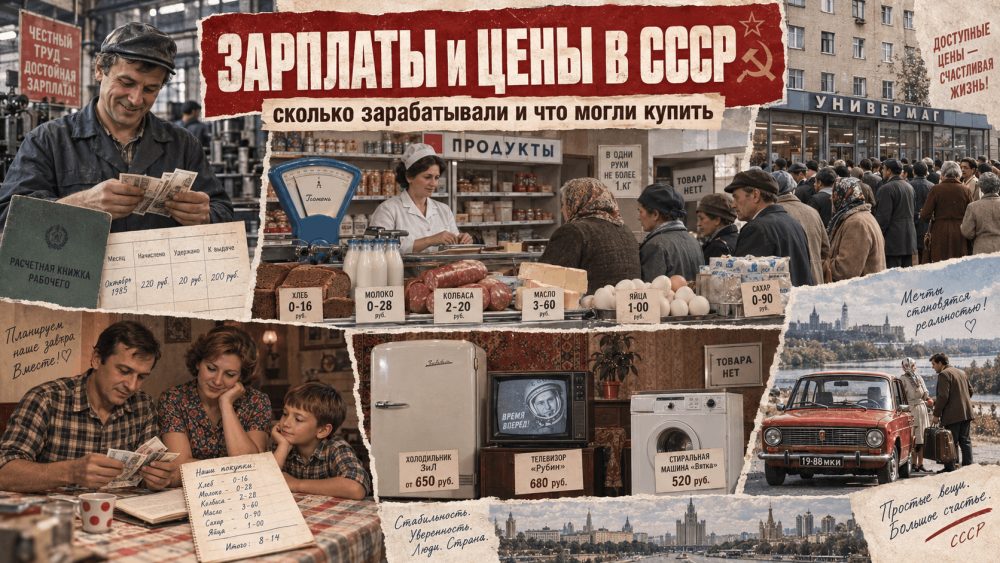
There is an appealing way to settle an argument about life in the Soviet Union: find an old price tag, find an old paycheck and divide one by the other. A loaf of bread for a few kopecks. A modest rent bill. A salary that seems small until you look at the price of everyday food. It makes for a neat comparison, and it is often misleading.
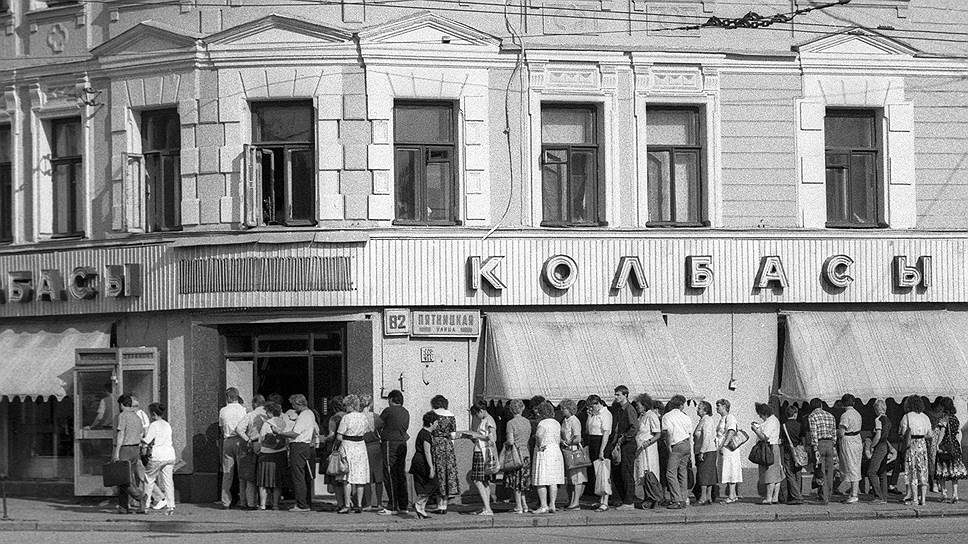
A Soviet price tag told you what a product would cost at that counter. It did not tell you whether the product would be there when you arrived. Nor did a national average wage reveal what a particular family in a particular town could spend. To make sense of Soviet wages and prices, we need to keep three things together: money, the official retail system and access to goods.
This article concentrates on the later Soviet decades, particularly 1985, because contemporary statistical yearbooks provide comparable series for earnings and actual prices paid. It does not splice a food price from 1978 into a salary from 1990 or claim that one large city represents all fifteen Soviet republics.
What was the average salary in the Soviet Union?
The official series most commonly quoted is the average monthly monetary wage of workers and employees in the national economy. This is a specific statistical category. It is not a median wage, the income of a whole household or a figure that automatically includes collective farmers. A national average also hides the differences between an industrial worker, an office employee and someone with bonuses or regional supplements. [1][2]
| Year | Average monthly monetary wage, rubles |
|---|---:|
| 1970 | 122.0 |
| 1980 | 168.9 |
| 1985 | 190.1 |
| 1990 | 274.6 |
*Sources: Soviet statistical yearbooks for the 1970 to 1985 series and the 1990 statistical yearbook for 1990. All amounts are expressed in post-1961 rubles. [1][2]*
A salary of around 190 rubles thus makes a reasonable starting point for a discussion of 1985. It does not make 190 rubles the pay of every Soviet citizen. A skilled worker at one factory might receive bonuses, while someone in a lower-paid occupation could receive much less. Workers in different republics and regions did not all earn the same amount either.
Nor is a worker's average wage the same as a family's resources. Two adults might have two incomes, but another household might support children, a pensioner or a family member outside paid employment. Divide a worker's wage by the price of bread and you learn something about a hypothetical purchase. You do not yet know how that household lived.
What did 190 rubles mean in 1985?
Imagine payday, not as a statistical table but as an evening at home. The household has to replenish food, buy a child's shoes and decide whether it is finally time to replace the refrigerator. The first task may be cheap in money and expensive in time. The second depends on finding the right size and an acceptable product. The third may require savings, an available model and a trip to the right store.
Some Soviet household costs were kept low or financed through state institutions. Larger consumer durables could take many months of saving. And the distinction between having enough money and obtaining the good mattered in both cases.
We can get closer to that reality by using a single year, stating exactly what the prices mean and refusing to turn them into a fictitious universal Soviet shopping basket.
Food prices in the USSR: a 1985 table
The figures below are average prices actually paid in state and cooperative retail trade in 1985, as published in the Soviet Union's 1990 statistical yearbook. They are not the price of every individual loaf, sausage or market purchase. Bread is shown per kilogram of bread and bakery products; eggs are shown per ten. The statistical categories and units matter. [3]
| Food | Average price in 1985 |
|---|---:|
| Bread and bakery products, 1 kg | 0.27 rubles |
| Potatoes, 1 kg | 0.15 rubles |
| Sugar, 1 kg | 0.86 rubles |
| Eggs, 10 | 1.03 rubles |
| Meat, including poultry, 1 kg | 1.89 rubles |
| Sausage products, 1 kg | 2.69 rubles |
| Animal butter, 1 kg | 3.42 rubles |
| Fish, 1 kg | 0.77 rubles |
| Cheese and brynza, 1 kg | 2.34 rubles |
*Source: Narodnoe khozyaistvo SSSR v 1990 g. (The National Economy of the USSR in 1990), Prices and Tariffs section. These are average recorded purchase prices for the stated retail channels. [3]*
A reader may remember a familiar loaf for 16 kopecks and wonder why the table says 27. Both memories and the table can be consistent. A loaf has a particular weight and type; the table measures a kilogram across a broader product group. We are not claiming that every loaf cost 27 kopecks.
The same caution applies to sausage. The statistical category includes different products rather than the exact price of one remembered variety. Personal photographs, a receipt and an official average answer different questions. A careful account can make room for all three.
What the table cannot measure is the effort behind a purchase. A kilogram of meat acquired after a long queue had an official price and a real cost in time. It may also have required giving up something else the family planned to do that afternoon.
Televisions, refrigerators and cars: another scale of spending
A weekly food bill and a color television belonged to different financial worlds. The 1990 yearbook also reported average 1985 purchase prices for durable goods: [3]
| Consumer good | Average price in 1985 |
|---|---:|
| Color television | 643.99 rubles |
| Black-and-white television | 229.10 rubles |
| Refrigerator or freezer | 288.11 rubles |
| Washing machine | 94.61 rubles |
| Tape recorder | 275.52 rubles |
| Passenger car | 7,748 rubles |
*These are average prices for product categories, not individual models or guaranteed prices in every store. Refrigerators and freezers are a combined category. [3]*
A family might hold on to an older television until a color set became attainable. A refrigerator was a significant household purchase. A car could require a much longer saving plan, and savings alone did not ensure that the desired model could be collected immediately. Allocation procedures and waiting times varied with period, model and channel of sale.
For the automobile story in particular, see our separate article on Soviet cars and their purchase queues. Here the important point is more basic: the price of ordinary groceries tells you almost nothing about the burden of buying a durable good.
Why a low official price did not guarantee access
Picture two options for the same food. At the state shop, the price is controlled, but the item may sell out before you get off work. At the collective-farm market, a seller may have it in stock, but the price can be considerably higher. A household chooses between money, time and certainty.
The Soviet statistics put a number on part of that difference. In 1985, food prices on collective-farm markets as a whole stood at 263 percent of state retail prices in the published comparison. For meat, the corresponding ratio was 253 percent. These are aggregate comparisons, not a claim that every tomato or every cut of meat was exactly 2.63 or 2.53 times more expensive. [4]
This is why saying that Soviet meat cost less than two rubles is incomplete without naming the year and retail channel. A low state price could coexist with a queue, an empty shelf or an alternative purchase at a higher price. The shopper paid with time, substitution or money elsewhere.
The broader mechanism is explained in our article about Soviet shortages and queues. The question here is how those shortages change the meaning of a paycheck. There was no universal conversion from a ruble in your pocket to a product in your shopping bag.
What about housing, education and health care?
A Soviet household budget did not consist only of prices at the grocery counter. State housing, education and substantial parts of health care were financed and allocated differently from consumer purchases in a modern market economy. That shaped what a monetary salary had to cover.
Still, a low rent payment does not mean that every family instantly received an apartment of its choice. Waiting lists mattered. The quality of provision differed by place, institution and era. Employment could affect access to housing or other benefits, and the value of a service was not identical to having the cash to buy something else.
Soviet statisticians sometimes calculated wages including payments and benefits from public consumption funds. For 1985, that expanded figure was 269 rubles, compared with a monetary wage of 190.1 rubles. Do not add the difference to the worker's cash envelope. The larger figure valued social benefits under a different accounting definition. It is not evidence that every worker took 269 rubles home in banknotes. [1][2]
For the wider picture of housing, school, work and family life, see Life in the USSR: What Was Everyday Soviet Life Really Like?.
Did rising wages make people better off?
Between 1985 and 1990, the reported average monetary wage rose from 190.1 to 274.6 rubles. That is a rise in the number printed in the statistical table. It does not mean that the average household could obtain correspondingly more food, clothing and appliances. [1]
One reason is that the available supply of particular goods could lag behind household demand. Another is that actual purchase prices and the channels through which a family acquired goods could change. Toward the end of the Soviet period, mounting supply problems made the gap between nominal income and accessible goods particularly visible.
It would be equally misleading to project the difficulties of 1990 or 1991 backward onto every shop and kitchen in 1975. Soviet living standards changed substantially across decades. An account that turns the entire country's history into one fixed picture, whether idyllic or bleak, loses what the figures are actually telling us.
Can a Soviet salary be converted into today's dollars or rubles?
You can perform an arithmetic conversion. You cannot make it a useful measure of living standards simply by choosing an official exchange rate.
The Soviet ruble did not function as a freely convertible currency for ordinary consumers. Housing arrangements, internal price structures, the range of goods and the available retail channels differed from those of a modern economy. Converting a monthly wage at an official rate and calling the result a modern salary ignores those differences.
A comparison built around one product is narrower but still incomplete. It may show how many kilograms someone could theoretically pay for at a recorded price. It does not tell you whether that much was available, whether the product is comparable in quality or what else a family needed to pay for.
A serious comparison needs a defined household, a specified period, a basket of comparable goods and services and an account of access. If we cannot meet those conditions, it is better to say what a table measures than to manufacture a dramatic present-day equivalent.
Our guide to the Soviet ruble and monetary reforms explains why currency figures can be especially deceptive here.
The 1961 monetary reform: never mix old and new rubles
There is another easy error in online price lists. On January 1, 1961, the USSR redenominated its money: ten old rubles became one new ruble, with wages, prices and tariffs recalculated. A salary stated in 1960 rubles cannot be compared directly with a salary stated in 1965 rubles without dealing with the reform first. [5]
The Presidential Library notes a wrinkle that makes indiscriminate conversions even less sensible: old coins of one, two and three kopecks retained their face value. Historical prices deserve a year, a monetary unit and, where necessary, an explanation of the conversion.
All wage and price tables in this article use the post-1961 denomination. We have not imported a dramatic price from the 1930s merely because it looks familiar in a social-media post.
So what could a Soviet salary really buy?
A paycheck in the late Soviet Union could cover many basic purchases at controlled prices. A color television or a passenger car represented a much larger financial undertaking. Social provision shaped household budgets, while waiting lists, regional differences and product shortages shaped everyday possibilities. Each part of the story is visible in the sources, but none is the whole story.
The useful question is not just 'How many rubles did someone earn?' It is 'What could that household actually obtain, where and when?' Once we ask it that way, Soviet wages and prices become a subject of history instead of an argument built out of a few favorite price tags.
Frequently asked questions
What was the average Soviet salary in 1985?
The average monthly monetary wage of workers and employees in the USSR was 190.1 rubles. It was an arithmetic mean for a defined labor category, not a median wage or household income. [1][2]
How much did bread cost in the USSR in 1985?
The recorded average purchase price of bread and bakery products was 27 kopecks per kilogram in state and cooperative trade. A specific loaf could cost something different because of its weight and type. [3]
How much did Soviet sausage cost?
In the same 1985 statistical series, sausage products averaged 2.69 rubles per kilogram. That is a product-group average, not the tag on every variety. [3]
What was the average Soviet salary in 1990?
The reported average monthly monetary wage of workers and employees was 274.6 rubles. Higher nominal earnings do not alone demonstrate greater consumer access in the late Soviet period. [1]
Could an ordinary Soviet worker afford a car?
It was a major purchase. The average recorded price of a passenger car in 1985 was 7,748 rubles, and having the money did not ensure an immediate purchase of a chosen model. [3]
Was everything cheap in the USSR?
No. Some basic goods and services had low state prices, while cars and many durable goods were expensive relative to one month's wages. Availability, waiting time and alternative retail prices also mattered. [3][4]
Related articles
- Life in the USSR: ordinary households and everyday routines
- Shortages and queues in Soviet retail
- The Soviet ruble and monetary reforms
- Five-Year Plans and the planned economy
Sources
1. USSR State Committee on Statistics. The National Economy of the USSR in 1990, Household Finances section, average monthly monetary wages by sector: https://www.istmat.org/node/440
2. USSR Central Statistical Administration. The National Economy of the USSR Over 70 Years, Wages and Household Income section, wage series and public consumption funds: https://istmat.org/node/9304
3. USSR State Committee on Statistics. The National Economy of the USSR in 1990, Prices and Tariffs section, recorded purchase prices for foods and durable goods: https://istmat.org/node/451
4. USSR Central Statistical Administration. The National Economy of the USSR Over 70 Years, Consumer Goods and Services section, collective-farm market prices compared with state retail prices: https://istmat.org/node/9306
5. Boris Yeltsin Presidential Library. The Monetary Reform of 1961: https://www.prlib.ru/node/618911