The Moscow Metro: palaces underground
A subway conceived as a showcase of socialism: marble, bronze, chandeliers and mosaics forty meters down. How the world's most beautiful metro was built, why ancient fossils hide in its walls, and what happened on its platforms during the war.
What the Moscow Metro is
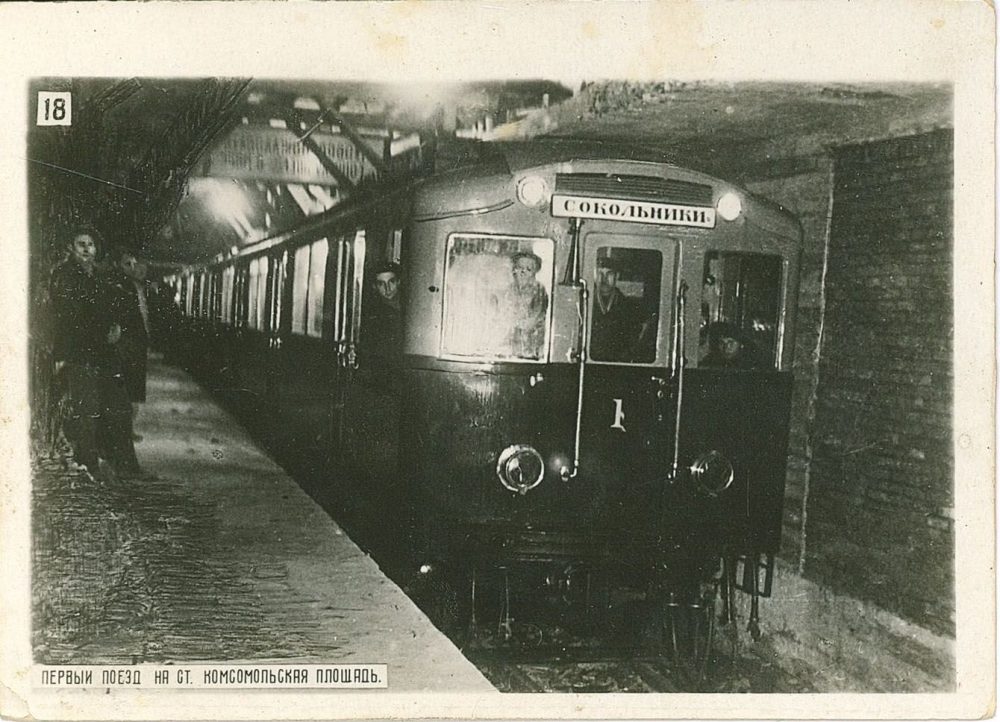
The Moscow Metro opened on May 15, 1935, and was conceived from the start not as transport but as a manifesto. The first line, 11 kilometers with 13 stations, ran from Sokolniki to Park Kultury with a branch to Smolenskaya, and even these first stations were finished the way theaters were not finished in the West. The formula was stated openly: palaces for the people. The marble, granite, bronze and chandeliers belonged not to an emperor but to a passenger with a five-kopeck coin.
Today it is one of the largest and busiest subways in the world and, by common consent, the most beautiful: dozens of stations hold protected architectural status, and guided tours walk through them as through museums. None of which cancels the main point: the metro works, carrying millions of Muscovites every day.
Why it was built
By the early 1930s Moscow was suffocating. Industrialization had driven hundreds of thousands of new workers into the city, trams were stormed rather than boarded, and in the winter of 1931 a heavy snowfall simply stopped the city's transport. Within months came the decision to build a metro. The idea had been discussed since before the revolution, but it became reality only now, when the entire street network had seized up.
There was no experience whatsoever, so the builders began by studying the best: British engineers who had built the London Underground were invited as consultants. The collaboration ended in the spirit of the age: in 1933 several British specialists were arrested on espionage charges and, after a loud trial, expelled from the country. From then on the Soviets built alone: Metrostroy, tens of thousands of workers and Komsomol volunteers, hand labor in waterlogged soil, and constant haste. The first line took four years. Its first passengers were the builders themselves, and the opening was celebrated with parades: the country had received not just transport but proof that it could build the future.
Palaces for the people
The real scale arrived with the second stage. Mayakovskaya, opened in 1938 to a design by Alexey Dushkin, became the world's first deep-level station carried on slender columns instead of massive pylons: steel arches, pink rhodonite, and in 34 oval ceiling niches the mosaics designed by Deyneka, a cycle called Twenty-Four Hours in the Land of the Soviets. Standing on a platform 33 meters underground, a passenger looked up and saw sky, aircraft, parachutists. The station's design took the Grand Prix at the New York World's Fair.
The underground luxury also carried an ideological assignment: the stations worked as visual propaganda, their mosaics and statues telling the passenger what a great country he lived in. The hammer and sickle probably appears here more often than anywhere else on the planet. The stone brought an unplanned bonus too: more than 700 prehistoric fossils are sealed into the marble and limestone cladding, from ammonites to sea lilies up to 300 million years old. The Moscow Metro turned out, incidentally, to be a paleontology museum.
The metro at war
From the autumn of 1941, when German aircraft began bombing Moscow, the metro became the city's main bomb shelter. At the air-raid signal, hundreds of thousands of people descended to the stations and into the tunnels: wooden decking was laid over the tracks, medical posts operated, even a library did. About 150 children were born underground during the war. Mayakovskaya served as the command post of the city's air defense, and on November 6, 1941, with the front a few dozen kilometers away, a ceremonial assembly was held on its platform at which Stalin spoke: the whole country listened to that broadcast from beneath the ground.
Construction did not stop either: seven new stations opened at the height of the war, their walls trading prewar themes for wartime ones. At Partizanskaya, statues of partisans greet passengers to this day.
The Ring and the Cold War
After the war the metro received its most ceremonial layer: the Koltsevaya ring line, where every station was built as a separate palace with its own theme, from the baroque vaults of Komsomolskaya to the mosaics of Kiyevskaya. This was the peak of the style later named Stalinist Empire. A famous legend explains the ring itself: Stalin, the story goes, set a coffee cup down on the planners' map, and the stain it left became the line. No document supports it, but Muscovites have told it for seventy years.
The deep postwar stations had a second, unceremonial function: in the Cold War years they were designed to survive a nuclear strike, with blast doors and autonomous systems. From the same root grows the metro's most durable myth: the legend of a secret "Metro-2" built to evacuate the leadership. The authorities have never confirmed it, which naturally keeps the legend alive.
Khrushchev's campaign against architectural excess ended the palaces: the stations of the 1960s were built fast, cheap and identical. And the subway itself, named after Kaganovich since its opening, was renamed in 1955 in honor of Lenin.
The metro as a way of life
For a Muscovite the metro has long been more than transport: it is a daily world with its own rules and rituals. You can tell a train's direction by ear: a male voice announces stations on the way to the center, a female voice on the way out. The nose of the bronze dog at Ploshchad Revolyutsii has been rubbed to a golden shine by students touching it for luck before exams. Rush-hour intervals run under two minutes, and the whole city lives to that beat.
The Soviet "metro as palace" model traveled the world: the subways of Leningrad and Kyiv, Prague and Pyongyang were built on its pattern. And the Moscow stations of the 1930s to 1950s became perhaps the most visited monument of the Soviet era: to see the USSR in its grandest self-portrait, all it takes is a metro ticket.
Frequently asked questions
When did the Moscow Metro open? On May 15, 1935: a first line of 13 stations and 11 kilometers, from Sokolniki to Park Kultury with a branch to Smolenskaya.
Why are Moscow Metro stations so beautiful? They were deliberately built as "palaces for the people": a showcase of socialism in which luxury belonged to every passenger. Marble, bronze, mosaics and chandeliers were a state assignment.
Which station is the most famous? Most often it is Mayakovskaya (1938): the world's first deep column station, Deyneka's mosaics, and the Grand Prix of the New York World's Fair. Dozens of stations hold protected architectural status.
How was the metro used in the war? As a bomb shelter for hundreds of thousands, a hospital and an air defense command post; about 150 children were born underground. On November 6, 1941, Stalin spoke at Mayakovskaya.
Is there really a secret "Metro-2"? It is the subway's most famous legend: no confirmed official information about secret lines exists. What is documented is that the deep Cold War stations were built to withstand a nuclear strike.
Why do male and female voices read the announcements? It is navigation by ear: the male voice sounds on the way toward the city center, the female voice on the way out. On the ring line the voices distinguish the direction of travel.
Related
- Joseph Stalin: the era in which the metro became a palace.
- The Great Patriotic War: the years when the stations became shelters.
- The Cold War: the reason for the blast doors on the deep stations.
- The hammer and sickle: the symbol found underground more often than anywhere.
- The Seven Sisters — the above-ground half of the same Empire style.
- VDNKh: the showcase of a country — the above-ground sister of the underground palaces.
Sources
The facts in this article can be verified against authoritative sources:
- Encyclopaedia Britannica, "Moscow Metro": https://www.britannica.com/topic/Moscow-Metro
- Wikipedia, "Moscow Metro": https://en.wikipedia.org/wiki/Moscow_Metro
- Wikipedia, "Mayakovskaya (Moscow Metro)": https://en.wikipedia.org/wiki/Mayakovskaya_(Moscow_Metro)
- TheCollector, "The History and Beauty of the Moscow Metro": https://www.thecollector.com/moscow-metro-history-beauty/
- Russia Beyond / GW2RU, "10 facts about the Moscow Metro you should know": https://www.gw2ru.com/travel/234172-moscow-metro-main-facts
Legends (Stalin's coffee cup, "Metro-2") are named as legends in the text and kept separate from documented facts.