Soviet Leaders in Order: From Lenin to Gorbachev
Who actually led the Soviet Union, and why do lists of Soviet leaders sometimes differ? From Lenin and Stalin to Andropov, Chernenko and Gorbachev, with dates, offices and the story of each succession.
Who led the Soviet Union?
There is a short answer, and then there is the answer that makes the history make sense.
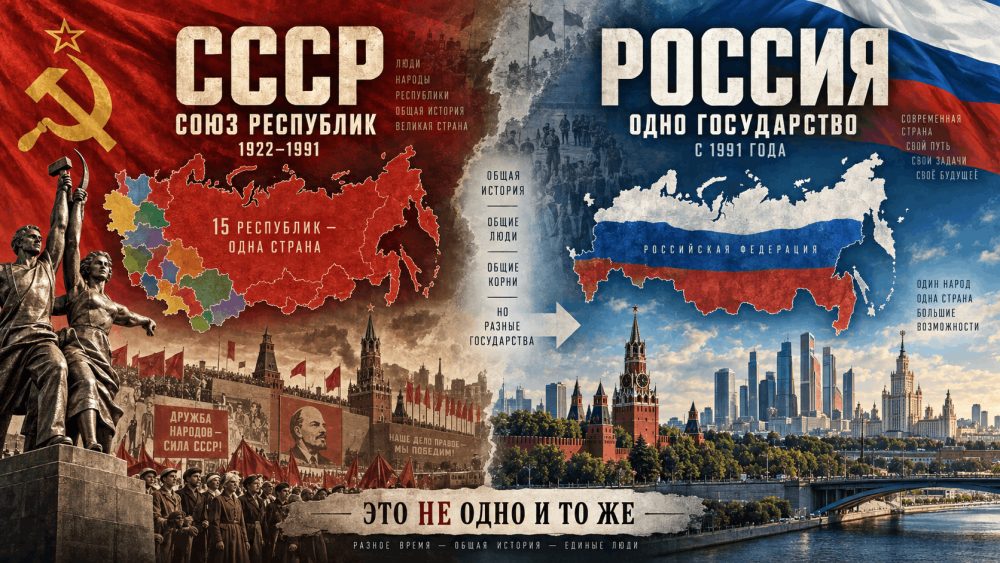
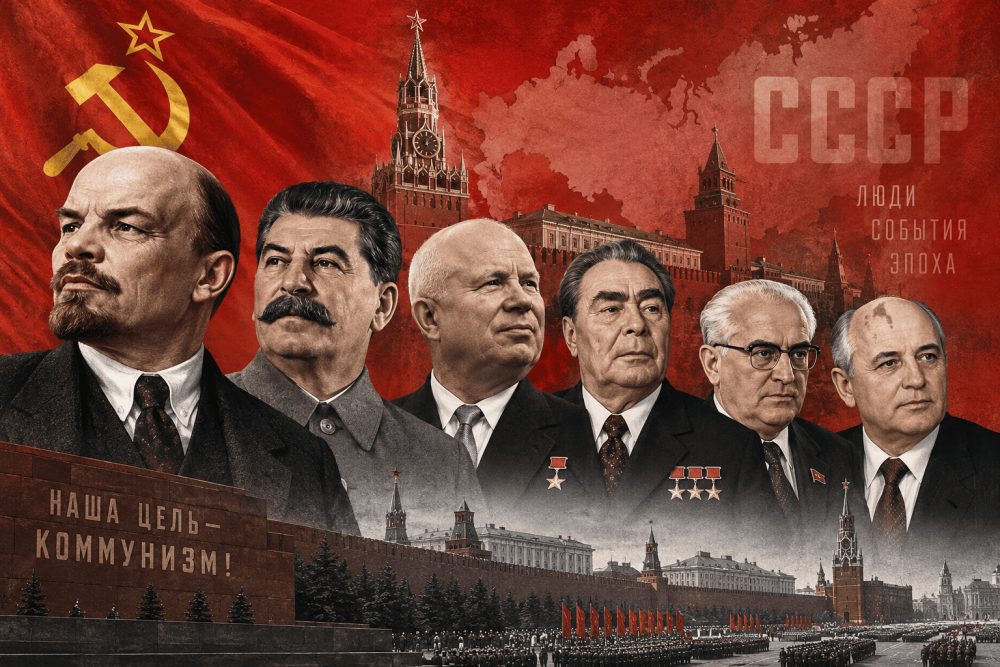
A familiar list of Soviet leaders runs from Vladimir Lenin to Mikhail Gorbachev. The complication is that for most of Soviet history there was no constitutional office called "leader of the Soviet Union." The most powerful person might be the head of government, the General Secretary of the Communist Party, the First Secretary, or, very late in the story, the President of the USSR.
That is why some reference works list seven Soviet leaders and others list eight. The disputed name is usually Georgy Malenkov. After Stalin died, Malenkov became head of government and briefly appeared to stand first among the new collective leadership. Within months, however, Nikita Khrushchev was gaining the upper hand inside the Communist Party.
If Malenkov is counted as a short transitional leader, the sequence looks like this:
| Leader | Approximate period of political leadership | Main office |
|---|---|---|
| Vladimir Lenin | 1917/1922-1924 | Chairman of the Council of People's Commissars |
| Joseph Stalin | late 1920s-1953 | General Secretary and later senior party secretary; head of government |
| Georgy Malenkov | March-September 1953 | Chairman of the Council of Ministers |
| Nikita Khrushchev | 1953-1964 | First Secretary of the Communist Party |
| Leonid Brezhnev | 1964-1982 | First Secretary, then General Secretary |
| Yuri Andropov | 1982-1984 | General Secretary |
| Konstantin Chernenko | 1984-1985 | General Secretary |
| Mikhail Gorbachev | 1985-1991 | General Secretary, later President of the USSR |
This is a list of political leaders, not a formal list of heads of state. In the Soviet system, those were not always the same thing.
Vladimir Lenin: before the USSR had even been created
Lenin came to power after the Bolshevik seizure of power in 1917. At that moment, the Soviet Union did not yet exist. He headed the government of Soviet Russia, which then fought through civil war, economic collapse and famine.
The Union of Soviet Socialist Republics was formally created in December 1922. That explains why timelines sometimes give Lenin's leadership as beginning in 1917 and sometimes in 1922. The first date refers to Bolshevik rule in Russia; the second refers to the USSR as a state.
Lenin's government moved from War Communism to the New Economic Policy, a limited retreat from complete state control intended to revive a devastated economy. He died on 21 January 1924 after a series of strokes.
Read more: Vladimir Lenin and The formation of the USSR in 1922.
Joseph Stalin: power did not pass in a single day
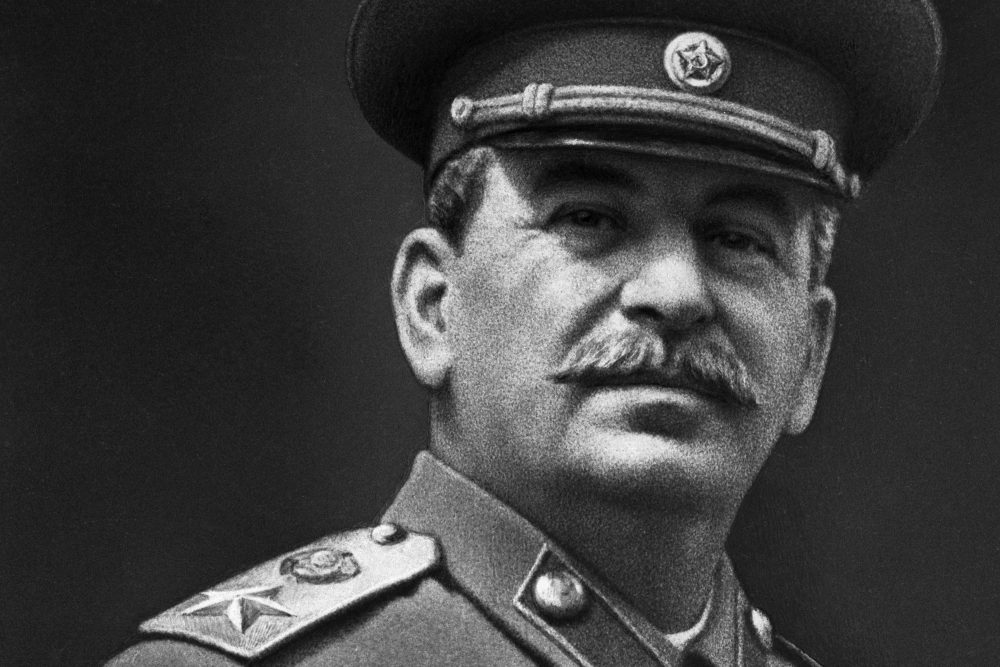
Stalin did not simply become dictator the moment Lenin died. That version is neat, but history was messier.
He had been General Secretary of the Communist Party since 1922. After Lenin's death, several senior Bolsheviks competed for influence. Stalin used his position, alliances and control over appointments to isolate rivals. By the end of the 1920s, he had become the dominant figure in Soviet politics.
The USSR changed radically under him. Forced industrialization built heavy industry at extraordinary speed. Collectivization transformed agriculture and contributed to catastrophic famine. The 1930s brought mass political repression and the Great Terror.
Then came the war against Nazi Germany. The Soviet Union suffered enormous human and material losses, but emerged from World War II as one of the world's two principal military powers. By the late 1940s it had an atomic bomb, a sphere of influence across Eastern Europe and an escalating confrontation with the United States.
Stalin died on 5 March 1953. A system built around one man suddenly had to function without him.
Read more: Joseph Stalin.
Georgy Malenkov: does he count as a Soviet leader?
This is the awkward line in almost every list.
After Stalin's death, Georgy Malenkov became Chairman of the Council of Ministers, effectively the head of government. For a brief period, he looked like the most prominent figure in the new leadership.
But there was no immediate return to Stalin-style personal rule. Power was shared among several senior officials, and Nikita Khrushchev was steadily strengthening his position inside the Communist Party. In September 1953 Khrushchev became First Secretary of the Central Committee.
Malenkov remained prime minister until 1955, but he had already lost the political contest for primacy.
So should he be listed? If the question is "Who briefly stood at the head of the post-Stalin government?", yes. If the question is "Who became the next durable leader of the Soviet system?", Khrushchev is the clearer answer. That is why serious lists can differ without either being simply wrong.
Nikita Khrushchev: the Thaw, housing and nuclear brinkmanship
Khrushchev consolidated power during the struggle that followed Stalin's death.
His name is inseparable from de-Stalinization. At the 20th Party Congress in 1956, he delivered the secret speech condemning Stalin's cult of personality and exposing parts of the repression. Prisoners were released, censorship loosened somewhat and Soviet cultural life became less suffocating. The period became known as the Khrushchev Thaw.
Yet Khrushchev's USSR was not politically liberal in the modern sense. Soviet forces helped crush the Hungarian uprising in 1956. His years in power included the Berlin crisis and, in 1962, the Cuban Missile Crisis, when the United States and Soviet Union came frighteningly close to nuclear war.
Inside the USSR, Khrushchev pushed mass housing construction, agricultural schemes and repeated administrative reorganizations. Some worked better than others.
In October 1964, his colleagues removed him from power. Unlike many losers in earlier Soviet succession struggles, he was neither imprisoned nor executed. He retired and lived until 1971.
Leonid Brezhnev: stability that slowly hardened into stagnation
Brezhnev emerged from the group that removed Khrushchev and gradually became the central figure in Soviet politics.
For many Soviet citizens, the first part of his rule felt more predictable. Living standards improved, millions of families moved into separate apartments and the leadership stopped constantly reorganizing institutions in the Khrushchev style.
Abroad, the 1970s brought detente and arms-control negotiations with the United States. At the same time, Moscow was prepared to use force to preserve Communist governments in its sphere. Warsaw Pact forces invaded Czechoslovakia in 1968.
By the late 1970s, the weaknesses of the system were becoming harder to hide. Economic growth slowed, shortages became more visible, corruption was entrenched and the senior leadership was aging. The Soviet intervention in Afghanistan in 1979 opened a long war and helped end the period of detente.
Brezhnev died on 10 November 1982, still in office after more than eighteen years at the top.
Read more: Leonid Brezhnev.
Yuri Andropov: fifteen months at the top
Brezhnev was succeeded by Yuri Andropov, the former head of the KGB.
His tenure was short but not empty. Andropov recognized that the Soviet economy and bureaucracy were in trouble. His government launched campaigns against corruption and workplace absenteeism, while younger officials received more attention inside the party apparatus.
His health, however, deteriorated rapidly. Andropov spent much of his final months in hospital and died on 9 February 1984, about fifteen months after becoming General Secretary.
Read more: Yuri Andropov.
Konstantin Chernenko: the old guard's final turn
After Andropov, the Politburo selected 72-year-old Konstantin Chernenko.
He represented the older Brezhnev generation and was already seriously ill. His public appearances became increasingly difficult, and his leadership lasted only a little over a year.
Chernenko died on 10 March 1985. In barely more than two years, the Soviet Union had buried three General Secretaries: Brezhnev, Andropov and Chernenko.
The spectacle made the age problem at the top impossible to ignore. This time the leadership chose someone from a younger generation.
Mikhail Gorbachev: reforming the system that then came apart
Mikhail Gorbachev was 54 when he became General Secretary on 11 March 1985.
At first, the language was about "acceleration." Soon came the words that defined his era: perestroika, glasnost and democratization.
Gorbachev intended to reform Soviet socialism, not abolish the Soviet Union. But the old controls weakened faster than stable replacements could be built. Economic disruption deepened. Open political debate exposed conflicts that had long been suppressed. National movements grew stronger in several union republics, while the Communist Party lost its monopoly on political life.
In 1990 a new office was created: President of the USSR. Gorbachev became the first and only person to hold it.
The failed August coup of 1991 shattered what remained of central authority. On 25 December Gorbachev resigned. The Soviet Union formally ceased to exist the following day.
Read more: Mikhail Gorbachev and The dissolution of the Soviet Union.
Who ruled the Soviet Union the longest?
If we mean actual political dominance, Stalin held the central position for the longest period. His supremacy developed during the 1920s and lasted until his death in 1953.
Brezhnev comes next among the stable postwar leaders. He remained at the top from October 1964 until November 1982, more than eighteen years.
The shortest periods belong to the transition after Stalin and to the final years of the aging Brezhnev generation. Andropov and Chernenko together led the party for less than two and a half years.
Why was the party leader more important than the formal head of state?
The Communist Party stood at the center of the Soviet political system. Its leadership controlled major appointments and set the broad direction of policy.
That is why the chairman of the Presidium of the Supreme Soviet could be the formal head of state while someone else was clearly the country's principal leader.
Brezhnev is a useful example. He became party leader in 1964 and was already the dominant political figure. He did not become the formal head of state until 1977.
A presidency appeared only at the very end of Soviet history. The office of President of the USSR was created in 1990, and Gorbachev remained its only holder.
Frequently asked questions
How many leaders did the Soviet Union have?
Usually seven or eight are listed. The difference is mainly Georgy Malenkov. Some accounts include his brief position at the top after Stalin's death, while others treat 1953 as a period of collective leadership and move directly to Khrushchev.
Who was the first leader of the USSR?
Vladimir Lenin. The USSR was formally established on 30 December 1922, when Lenin already headed the Soviet government.
Who was the last Soviet leader?
Mikhail Gorbachev. He became General Secretary in 1985 and President of the USSR in 1990.
Who came after Stalin?
A collective leadership emerged immediately after Stalin died. Malenkov became head of government, but Khrushchev secured the key party leadership position in September 1953 and gradually became the dominant leader.
Who came after Brezhnev?
Yuri Andropov, then Konstantin Chernenko, then Mikhail Gorbachev.
Did the Soviet Union have a president before Gorbachev?
No. The presidency of the USSR was created only in 1990. Gorbachev was the first and only Soviet president.
Related articles
Sources
- Library of Congress, *Soviet leaders from Lenin to Gorbachev*: https://www.loc.gov/item/92019903/
- Library of Congress, *Soviet Union: A Country Study*: https://www.loc.gov/item/90025756/
- HISTORY, *Soviet Union Leaders: A Timeline*: https://www.history.com/articles/soviet-union-leaders-order
- U.S. Department of State, Office of the Historian, *The Collapse of the Soviet Union*: https://history.state.gov/milestones/1989-1992/collapse-soviet-union